
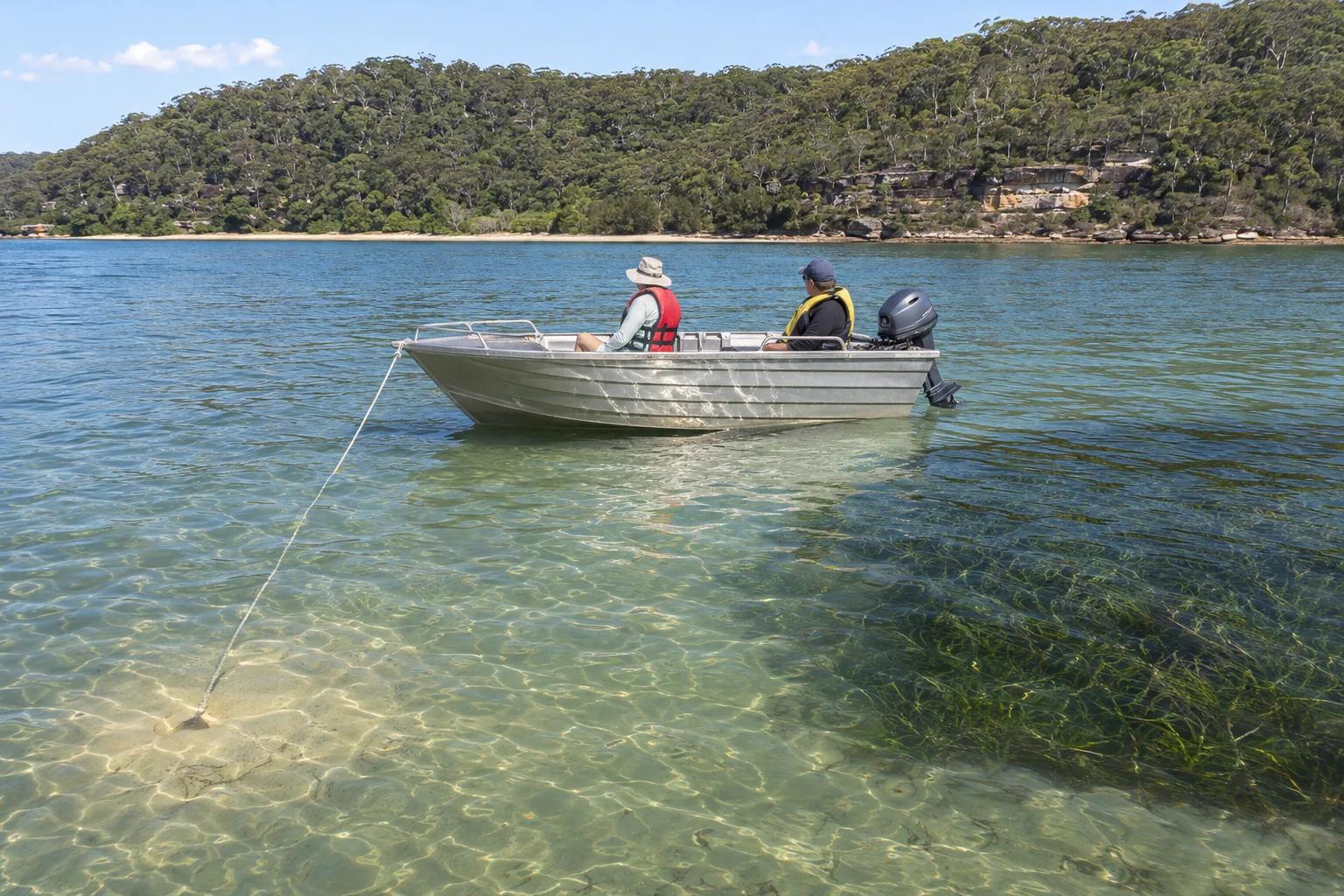
Work through a coastal trip and a later anchoring stop. Practise the handbook's anchor-line ratios using the depths given here; you must still allow for tides, swing room and conditions on the water.
Step by step
In open water, you meet large waves coming directly towards you. How should you handle this head sea?
Three adults are crossing the bar in an ordinary powerboat. Who must wear a Level 100 or above lifejacket?
On return, large breaking waves make entry too dangerous. What is the safe response?
At a suitable sandy anchorage, water depth is 4 metres. Using the handbook's 3:1 ratio for this calculation, how much anchor line do you let out?
Now on your own
On another trip, you cross Sydney Harbour and later stop in a sheltered bay. Make each decision without help.
Can you drift in the Sydney Harbour Bridge Transit Zone while waiting for a friend, with no emergency?
You want a free public mooring for a short stop. Which buoy colour identifies that category in NSW?
Instead, you choose a suitable anchorage. Put these actions in order.
- 1Check shelter, depth, seabed, restrictions and swing room
- 2Check your position against landmarks to confirm the anchor holds
- 3Lower the anchor from the bow and pay out line as the boat moves backwards
- 4Slow down and prepare the anchor and line with the other end secured
The water is 6 metres deep and the current is strong. Using 5:1 for this calculation, how much line is needed?