
Decide
Four situations at sea. Decide first, then read why.
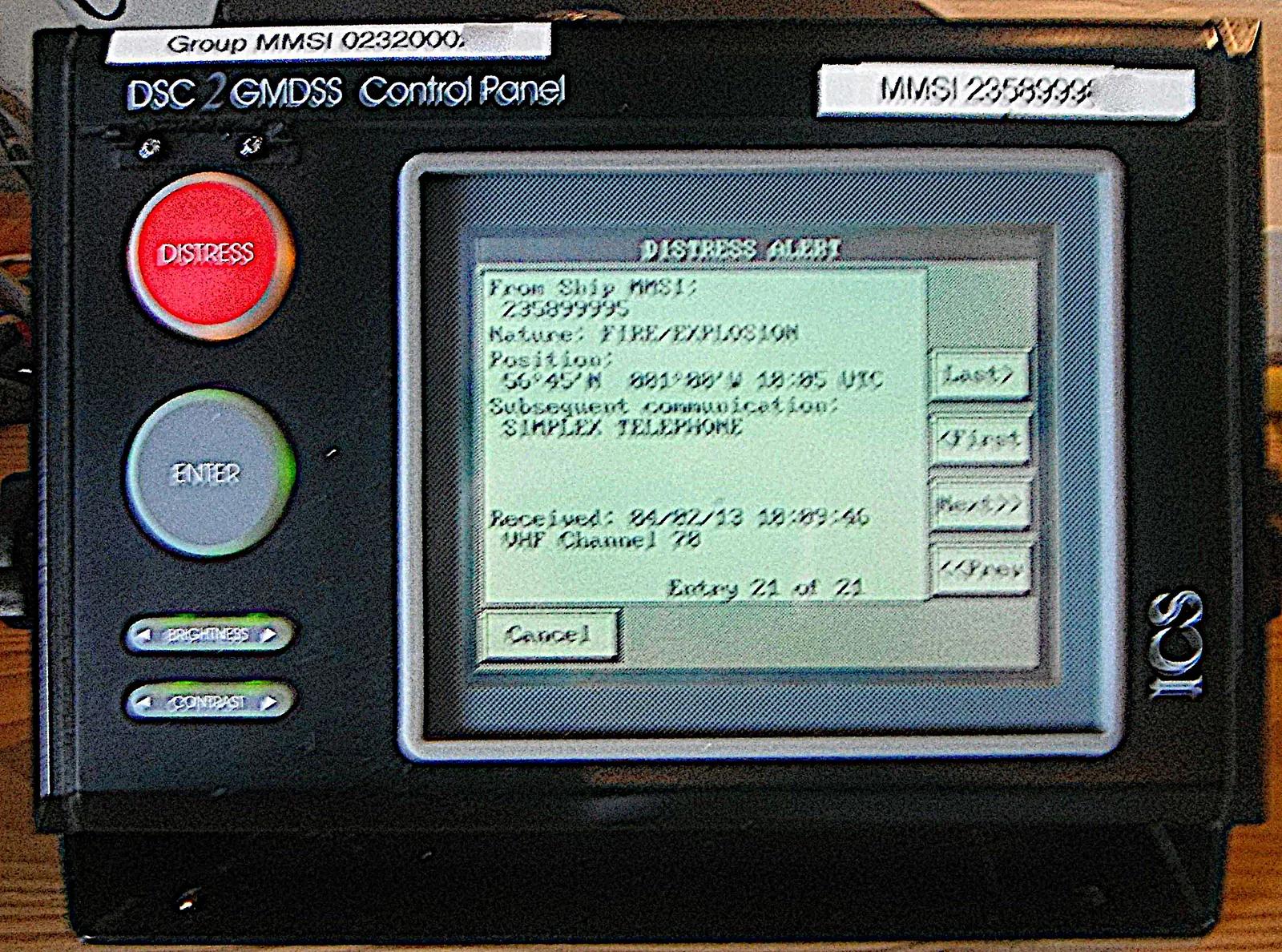
Your DSC panel shows a distress alert from a ship 6 miles away. You are in sea area A1. First?
Key points
- Sea areasA1 VHF, A2 MF, A3 satellite, A4 the rest.
- All ships: VHF DSC ch 70 watch, SART, NAVTEX, 406 MHz EPIRB.
- 500 GT+: a SART each side, three two-way VHFs.
- Rules in SOLAS chapter IV.
- Channels70 DSC only; 16 distress and calling; 13 bridge to bridge; 6 intership and SAR.
- MMSI: nine-digit DSC identity.
- Keep GNSS linked to the DSC controller.
- Move off 16 to a working channel.
- Priorities and proceduresMAYDAY > PAN PAN > SECURITE.
- Distress on the master's authority: DSC alert, then voice on 16.
- False alert: reset and cancel by voice, log it.
- Received alert: listen, call the master, plot, log.
- EPIRB, SART, NAVTEXEPIRB 406 MHz; SART 12 dots on X-band; NAVTEX 518 kHz in English.
- EPIRB float-free, check expiry dates.
- SART dots become arcs and circles close in.
- Record tests in the radio log.
Lessons
Short lessons, each ending with 2 questions.
- 7.1Sea areas decide the equipmentSOLAS chapter IV divides the sea into four GMDSS areas.Estimated time: about 2 minutes
- 7.2Which channel for whatVHF channel 70 (156.525 MHz) is for DSC only: never speak on it. Channel 16 (156.8 MHz) is for distress, urgency and safety calls by voice, and for calling.Estimated time: about 2 minutes
- 7.3Distress, urgency, safety, and false alertsMAYDAY (distress) is for grave and imminent danger needing immediate help.Estimated time: about 2 minutes
- 7.4EPIRB, SART, NAVTEX and the radio logThe EPIRB sends its distress alert on 406 MHz to the COSPAS-SARSAT satellites, which pass it to a rescue coordination centre.Estimated time: about 2 minutes
Practise and go further
Check what you have read
Question 1/3
A ship sails only within range of shore-based VHF DSC stations. Which GMDSS sea area is it in?