
Decide
Four situations at sea. Decide first, then read why.
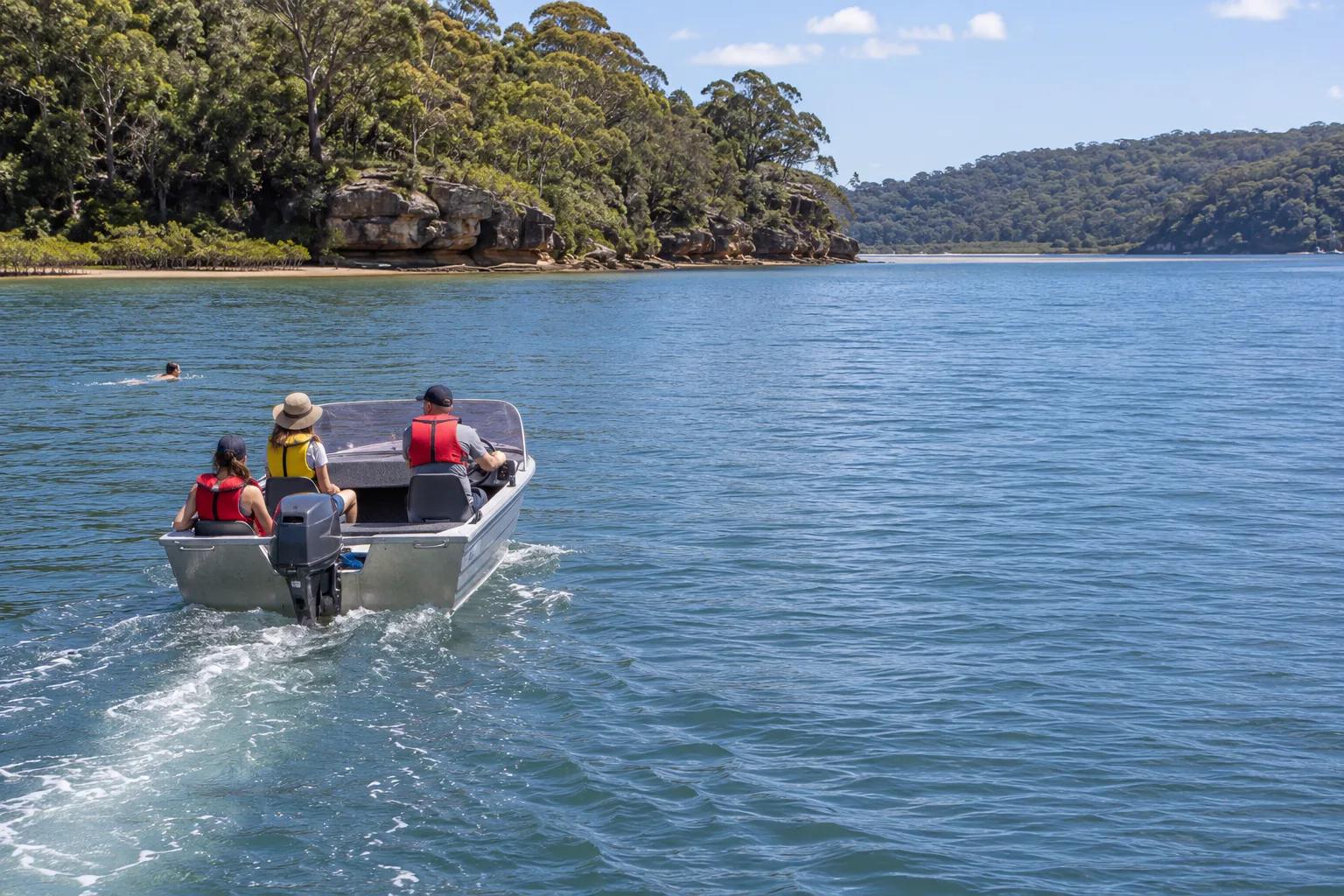
On Pittwater you plan to motor past a swimmer 40 metres away. There is open water to your right. What should you do?
Key points
- 60 for people, 30 at 6 knotsOn a powered boat, keep 60 metres from people in the water and 30 metres from boats, shore and structures at 6 knots or more.
- The 60-metre rule also covers dive floats and designated swimming and surf-zone boundaries.
- Moored boats, bridges, jetties and navigation markers count.
- Exceptions and confined situations still require a safe distance and safe speed. Naval vessels: 200 metres from the bow and 60 metres from the side underway; 60 metres at anchor.
- Watch your wakeThe safe speed may be well below the sign, especially near small boats and the shore.
- Allow time to stop or turn in the actual conditions.
- Slow well before reaching an anchorage or busy beach.
- Look astern: a speed limit does not excuse excessive wash.
- Choose a sober crewNSW: zero BAC under 18; below 0.05 for adults on recreational vessels.
- Drivers, towing observers and riders all have BAC limits.
- The adult commercial limit in the NSW handbook is below 0.02.
- You cannot reliably calculate your BAC from the number of drinks; plan no alcohol.
- People and loadCheck both capacity and weight, then keep passengers safely within the boat underway.
- Follow the Builders Plate if fitted; equipment adds to the load.
- Carry an approved lifejacket for everyone.
- No casual bow, platform or transom riding, or legs dangling outside a powered boat underway.
- One driver, one observer, a clear towWatch the rider throughout the tow and leave room for their wider path.
- An observer under 16 needs a boat or PWC licence; the observer faces backwards.
- Every rider wears a Level 50S or higher lifejacket. Ordinary tows keep the rider at least 7 metres behind; the shorter-distance exception has strict conditions.
- Maximum three people towed; no towing between sunset and sunrise. Under-16 driver wording conflicts: use the stricter no-towing approach and check the current TfNSW page.
- Wakesurfing without a rope still has a 7-metre separation rule and the same strict exception. Recover riders at a safe speed; stop and bring them aboard if safe. On the road, nobody rides in the trailer or boat being trailered.
- Check the state before you goVictoria uses an under-21 zero-BAC rule; Queensland recreational skippers must stay below 0.05.
- Victoria's under-21 zero rule includes being in charge at anchor.
- For Victoria's unresolved age-21 wording, plan no alcohol and check Safe Transport Victoria; for NSW, check the current TfNSW page.
- Conservatively stay below 0.05 if older in Victoria; check its current boundary wording.
- Check MSQ's separate commercial rules before commercial operation.
Lessons
Short lessons, each ending with 2 questions.
- 6.1Give people and boats enough roomOn a powered boat, keep at least 60 metres from people in the water, the boundaries of designated swimming areas and surf zones, and dive flags or floats.Estimated time: about 3 minutes
- 6.2A speed limit still leaves you a decisionAlways travel at a speed that gives you time to stop or turn away from danger.Estimated time: about 3 minutes
- 6.3A sober skipper and safe passengersIn NSW, the BAC limit is 0.00 for anyone under 18.Estimated time: about 3 minutes
- 6.4Plan the tow, including the trip to the rampA boat towing a person needs a driver and a separate observer, registration if applicable, a safety label where required and the required safety equipment.Estimated time: about 5 minutes
- 6.5In Victoria and QueenslandThese are other states' rules, not NSW rules.Estimated time: about 2 minutes
Check what you have read
Question 1/3
You are motoring at 4 knots towards a swimmer on an open stretch of Pittwater. You have plenty of room to divert. What minimum clearance must you keep?