
Decide
Four situations at sea. Decide first, then read why.
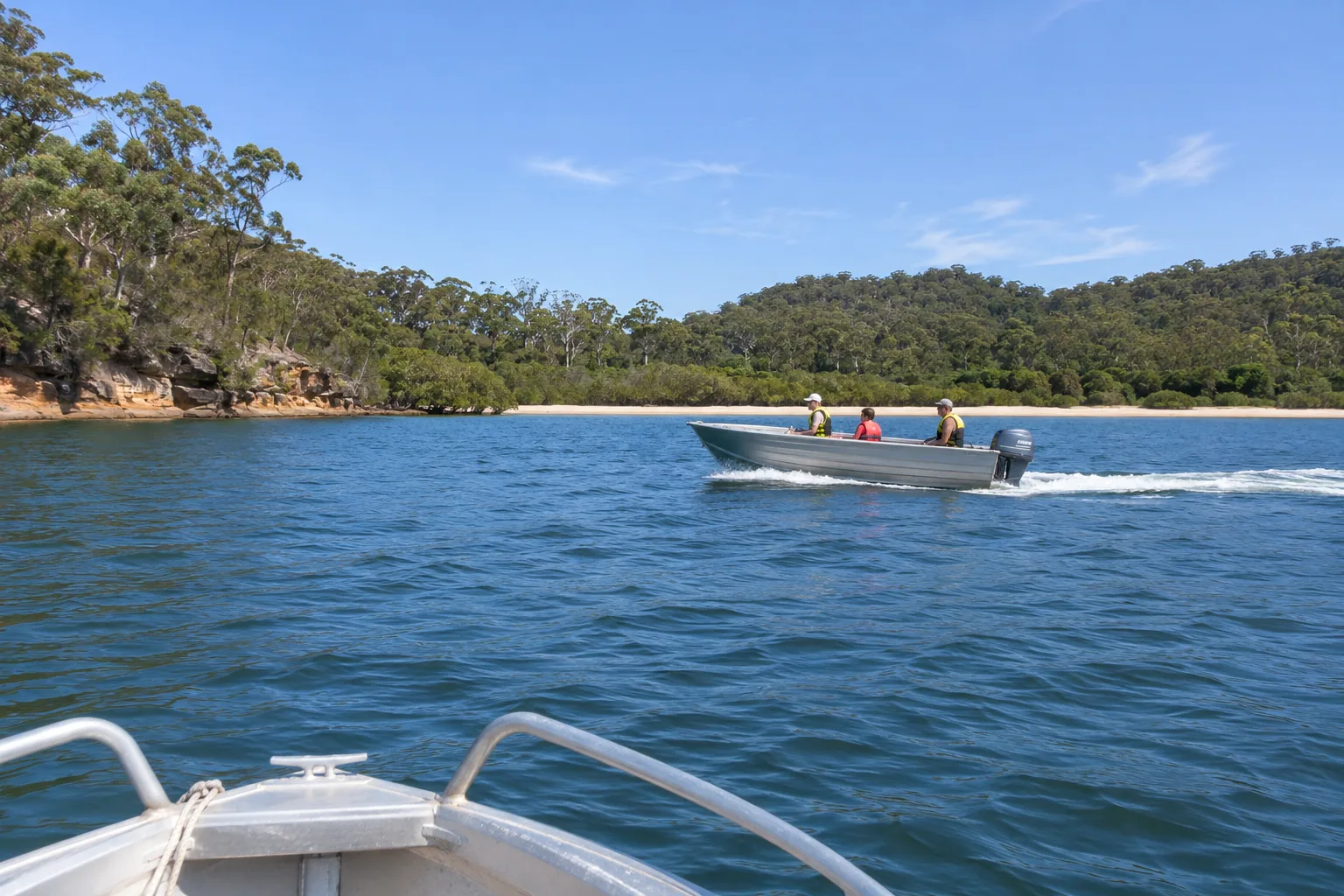
From your runabout on Pittwater, another powered boat approaches from your starboard side on a crossing track. Neither is overtaking. What do you do?
Key points
- Look and listen all aroundA proper lookout is continuous and includes what is behind you.
- Use sight and hearing; keep music low enough to hear warnings. Look for navigation lights and unlit hazards at night.
- Watch for low craft, people in the water, lines and floating hazards. Keep spinning propellers away from people.
- Use radar if fitted, dim its display at night and get a lookout person to help when your view is blocked.
- Watch for seaplanes; check overhead clearance against your boat's full height and the water level.
- Head-on and crossing under powerHead-on: both turn right. Crossing: give way to the boat on your right.
- Give way early by a clear course or speed change.
- The stand-on boat maintains course and speed only if safe.
- Both skippers stay ready to prevent collision.
- Sailing rulesPower normally gives way to sail; check for overtaking and special vessels.
- A yacht using its engine follows powered-vessel rules.
- Under sail: port tack gives way to starboard tack; on the same tack, windward gives way.
- Sydney Harbour's orange-diamond ferry priority over sail applies during the day, except when the ferry is overtaking a sailing vessel. It does not apply at night; both skippers must still avoid collision.
- The overtaking boat keeps clearOvertaking applies to every type of vessel, including sail overtaking power.
- Pass on either side only when safe, with safe speed and clearance.
- Do not cut in front of the boat you pass.
- If being overtaken, maintain course and speed if safe.
- Give working vessels roomKeep well clear of big ships, dredges, work barges and commercial fishing vessels.
- Do not obstruct a ship or pass between it and its escort.
- Dredge: two diamonds show the safe side; two balls mark the obstructed side.
- Moving cable ferry: 4 knots or less within 100 metres of its chains, ropes or cables. Pass safely behind, preferably after it reaches shore, and turn power off when crossing its chains, ropes or cables.
- Act early and check the resultYou must avoid collision even if the other skipper does nothing.
- Make a change large enough to be clearly seen; avoid repeated tiny alterations.
- Slow, stop, reverse or alter course as appropriate to the situation.
- Keep watching until the danger has passed.
- Keep right in narrow waterwaysIn a narrow channel or river, keep as far to starboard as practical.
- Keeping to starboard is also recommended in other channels and rivers.
- A channel may be narrow because a larger vessel needs its width or deepest water.
- Use a safe speed, take extra care at bends and never block the waterway.
Lessons
Short lessons, each ending with 2 questions.
- 5.1Keep looking and listeningAs skipper, you must keep a proper lookout by sight and hearing at all times.Estimated time: about 3 minutes
- 5.2Two powered boats: make your intentions clearWhen two powered vessels meet head-on, both must turn to starboard, which is right, and pass at a safe distance.Estimated time: about 2 minutes
- 5.3Sail, power and overtakingA powered vessel gives way to a sailing vessel, unless the sailing vessel is overtaking it. A sailing vessel using its engine follows the powered-vessel…Estimated time: about 2 minutes
- 5.4Leave room for vessels that cannot easily moveAll vessels must keep well clear of big ships and other large vessels.Estimated time: about 2 minutes
- 5.5Avoid collision and keep to starboard in channelsYou must take appropriate action to avoid a collision, even if the other skipper does nothing.Estimated time: about 2 minutes
Check what you have read
Question 1/3
Before changing course on Lake Macquarie, where should your lookout extend?