
Decide
Four situations at sea. Decide first, then read why.
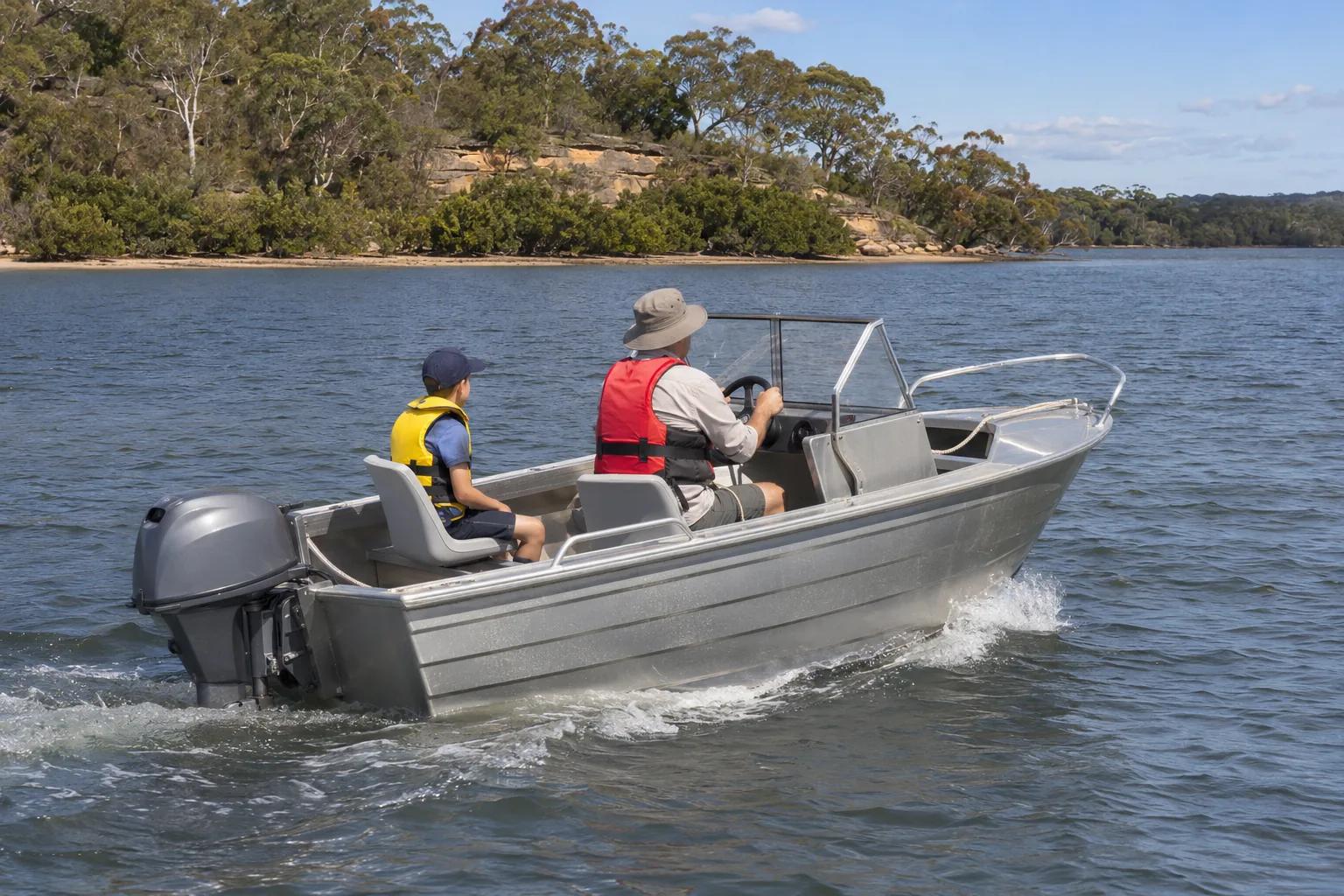
You are the only adult in a 4.3 m runabout on enclosed waters inside Lake Macquarie. Your nine-year-old is aboard. It is daylight. What must you wear?
Key points
- Powerboats and sailing boats under 4.8 mEnclosed waters: wear when alone or at night; alpine and open waters: wear at all times.
- Enclosed and alpine minimum: Level 50S or above. Ordinary powerboats on open waters: Level 100 or above.
- Alone includes one adult with only children under 12. Night is sunset to sunrise.
- At exactly 4.8 m, follow the stricter small-boat wear triggers and check the current TfNSW page: its wording differs from the handbook.
- Bars, towing and the skipper's callPut the right jacket on before you reach the risk.
- Powerboats 4.8 m or longer: everyone wears Level 100 or above crossing a coastal bar.
- Everyone on a PWC and anyone being towed: Level 50S or above at all times; inflatables are not recommended.
- Wear when the skipper directs you, whatever other wear rules apply.
- One suitable jacket for each personCarry the right size and level, in good condition and within easy reach.
- Level 50 and 50S support you but do not automatically turn you face up.
- Level 100 helps turn you face up; it is not intended for rough conditions. Level 150 is intended for offshore and rough weather.
- Old Type 1/2/3 correspond to Level 100+/50/50S; the handbook permits well-maintained old types.
- Mark hidden storage with a red-on-white 'Lifejackets' sign.
- An inflatable needs checks and servicingCheck before wearing and service on schedule.
- Check wear, cylinder condition and tightness, any automatic cartridge's expiry and tightness, and the free pull cord.
- Service annually or in accordance with the manufacturer's instructions; record the date inside and keep evidence.
- Follow the model's instructions for permitted self-servicing. A failed check means do not use it; use an accredited service agent.
- After use, remove an automatic cartridge before rinsing, dry and reconnect before storage. Store out of sun and away from fuel; never use a jacket as a cushion.
- Under 12: wear early and fit properlyUnder 4.8 m: wear at all times; 4.8 m to less than 8 m: wear in open areas underway.
- Children's minimum: Level 50S or above on enclosed waters, Level 100 or above on open waters.
- Use an approved jacket that cannot slip off. A crotch strap is recommended; inflatables are not recommended for under-12s.
- Use the stricter reading at exactly 4.8 m: under-12s wear at all times; at exactly 8 m: in open areas underway. Check the current TfNSW page.
- Other wear rules still apply. From age 12, follow adult rules, with wearing at all times still strongly recommended.
- Babies and petsA baby's jacket must fit now; a dog's jacket needs its own fit too.
- Babies need an approved jacket suited to their weight, snugly fitted and with a crotch strap.
- If no jacket fits, follow the stricter handbook restriction: do not carry the baby under 4.8 m, or in open areas from 4.8 m to less than 8 m underway. Apply the boundary precautions above and check the current TfNSW page; its infant advice differs.
- NSW has no pet wear requirement. Consider a well-fitting dog jacket with a grab handle.
- Victoria uses different rulesCheck the destination state's wear rules and waterway categories.
- Victoria: wear in open areas underway on powered boats up to and including 4.8 m; boats over 4.8 m and under 12 m also require wear at heightened risk. At exactly 12 m, wear at heightened risk and check the current Safe Transport Victoria page because its boundary differs from the handbook.
- Victorian ordinary powerboats: Level 100 or above on enclosed and coastal waters; Level 50S or above inland.
- Victorian under-12s wear in open areas underway; coastal and enclosed minimum is Level 100 or above.
- For Queensland, check current Maritime Safety Queensland guidance before boating there.
Lessons
Short lessons, each ending with 2 questions.
- 2.1Start with your boat, your waters and your crewWearing a lifejacket at all times is recommended.Estimated time: about 4 minutes
- 2.2Carry the right level and make it easy to reachA recreational boat must carry an approved lifejacket for each person, even when wearing one is not compulsory.Estimated time: about 3 minutes
- 2.3Look after it before you need itCheck for damage, rinse off salt after use and store lifejackets dry, ventilated and out of sunlight.Estimated time: about 3 minutes
- 2.4Children need their own fit; dogs need a separate planChildren under 12 must wear a lifejacket at all times on vessels under 4.8 m. On vessels 4.8 m to less than 8 m, they must wear one in open areas while…Estimated time: about 3 minutes
- 2.5In Victoria and QueenslandThese are other states, with their own rules.Estimated time: about 2 minutes
Check what you have read
Question 1/3
You take a 4.2 m runabout out alone on enclosed waters at midday. What must you do about a lifejacket?