Decide
Four situations at sea. Decide first, then read why.
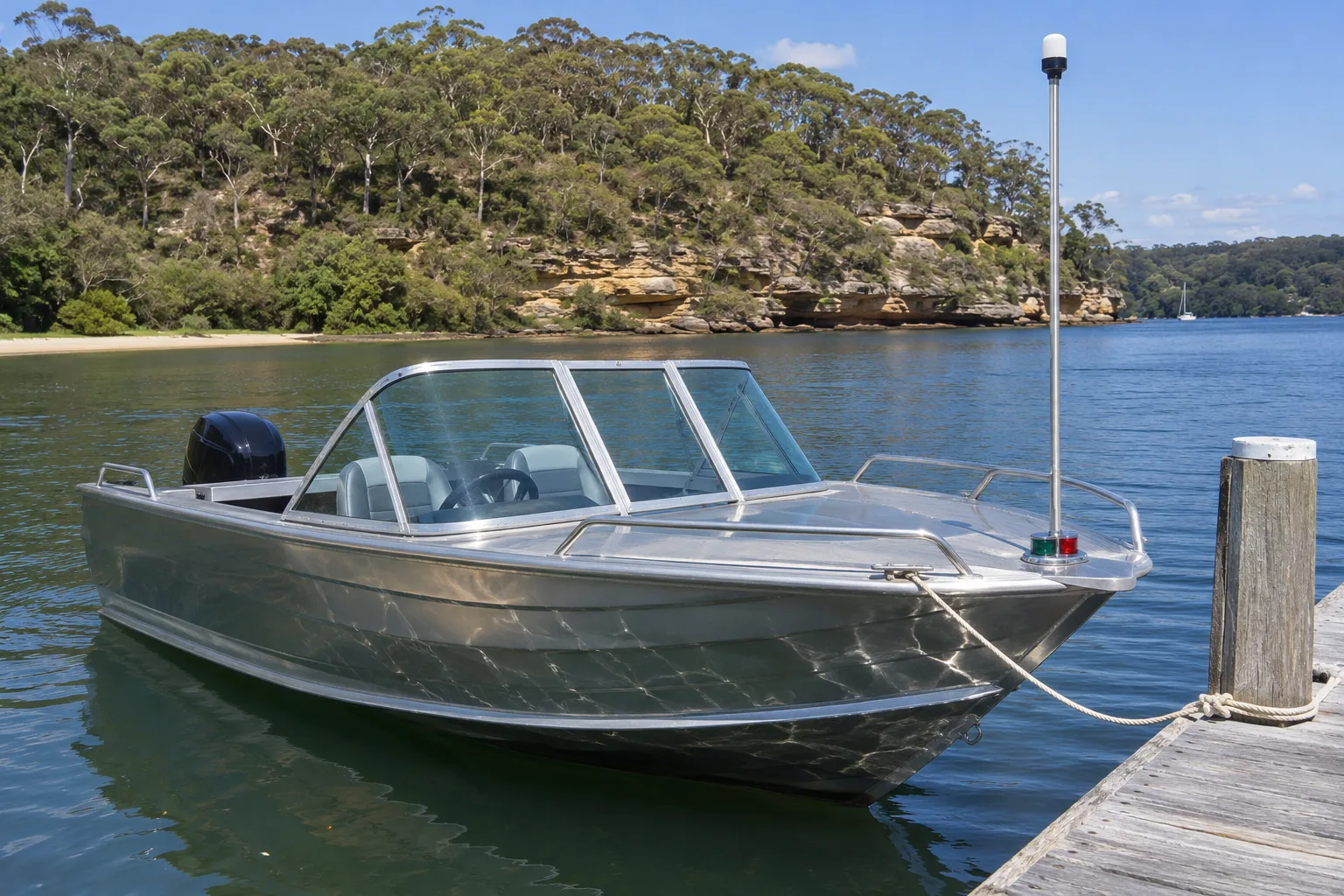
You are preparing a 5.5-metre runabout capable of 25 knots for an evening trip on Pittwater. You plan to travel at 5 knots. Which lights do you need underway after sunset?
Key points
- Small powerboat lightsUnder 12 metres: sidelights, plus either masthead and stern lights or an all-round white light.
- Red to port; green to starboard. Show lights sunset to sunrise and in restricted visibility.
- Keep the masthead or all-round white light at least 1 metre above the sidelights.
- Under 7 metres and maximum speed no more than 7 knots: all-round white, plus sidelights if possible. Slowing a faster boat does not qualify it.
- PWC must not be driven between sunset and sunrise.
- Sail and anchor are differentUse lights for what the vessel is doing now.
- A 7–20-metre yacht under sail may use sidelights and a sternlight, or a mast-top tricolour. Under 7 metres, fit sidelights and a sternlight if possible; otherwise use a torch.
- Using the engine means powered-vessel lighting rules, even with sails set.
- At anchor up to 50 metres: all-round white, with underway sidelights off.
- Drifting or holding position with a GPS-guided electric motor counts as underway.
- Recognise the directionLook at the pattern, then keep watching.
- Coming towards you: green on your left, red on your right; powered vessels also show a forward-facing white light.
- Crossing red: from your right to left. Crossing green: from your left to right.
- A single white light can mean anchored, moving away or a small vessel underway in another direction.
- Keep a lookout for faint lights against a bright shoreline.
- Working vessels and ferriesSpecial lights tell you there is more to the situation.
- Many lights or lights high up may indicate a large ship or fishing vessel: keep well clear.
- Dredge working lights: green marks the safe passing side; red marks the obstruction side.
- Sydney Harbour high-speed ferry travelling at speed: normal powered-vessel lights plus flashing all-round yellow.
- Hear the action or warningOne short starboard, two short port, three short engines astern.
- Five short blasts express doubt about intentions or sufficient collision-avoidance action.
- One long blast warns of a blind bend.
- Short: about 1 second. Long: 4–6 seconds.
- Carry a sound signal device. The manoeuvring signals here apply when vessels are in sight.
Lessons
Short lessons, each ending with 2 questions.
- 8.1Your powerboat's lightsDisplay navigation lights from sunset to sunrise and in restricted visibility, including fog, smoke or glare.Estimated time: about 3 minutes
- 8.2Sailing, anchoring and staying in one placeA sailing boat under 7 metres must display sidelights and a sternlight if possible.Estimated time: about 3 minutes
- 8.3Read the whole patternLights tell you about a vessel's type, direction and whether it is underway or at anchor.Estimated time: about 2 minutes
- 8.4Recognise working vessels and ferriesShips and other large vessels over 50 metres show two masthead lights.Estimated time: about 2 minutes
- 8.5Say what you are doing with soundWhen underway and in sight of other vessels, sound signals communicate your actions and help prevent collisions.Estimated time: about 2 minutes
Check what you have read
Question 1/3
Smoke reduces visibility during a daytime trip. When must you display navigation lights?