
Decide
Four situations at sea. Decide first, then read why.
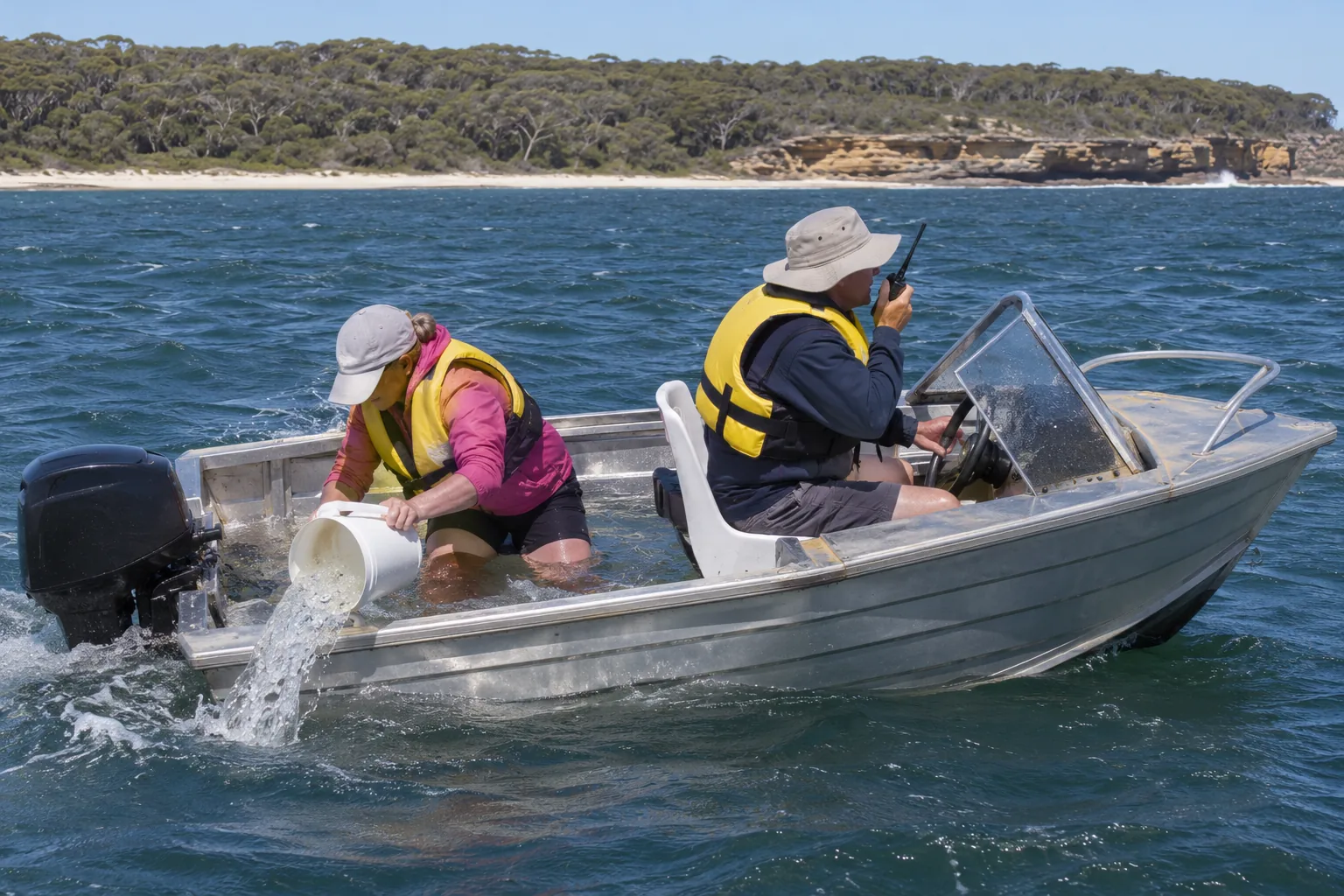
Off Jervis Bay, your boat is taking water rapidly and people are in imminent danger. Which call do you make?
Key points
- Use the right callVHF 16 or 27 MHz 88: tell rescuers where you are and what is wrong.
- Mayday: imminent danger. Pan pan: urgent trouble without imminent danger. Securite: navigational safety information.
- An EPIRB alerts by satellite; flares and a V sheet help rescuers see you. Orange smoke is for day; red hand flares for day or night.
- Call 000 by phone where reception is available. A phone does not replace a required marine radio.
- Listen to a Mayday; if no shore station answers, try to relay it and help.
- Stop and help; report when requiredAfter an incident, stop, help and give the required details.
- A report is required for death or injury, more than $5000 damage to vessels or other property, or environmental damage or risk.
- Submit within 24 hours unless you gave the required details to authorised officers at the incident.
- Fire and toxic gas need prompt actionWarn people, control the source if safe and call for help.
- Fire: shut fuel and gas lines, use the appropriate extinguisher if safe and reduce oxygen by closing hatches and vents.
- For fire abandonment, wear lifejackets and leave on the windward side.
- Carbon monoxide has no smell. Headache, dizziness or nausea can mean poisoning.
- Suspected gas: stop engines and appliances, shut cylinder valves, move to fresh air and ventilate. Avoid electrical switches until clear; call for rescue and medical help. Watch casualties and give CPR if they are not breathing.
- See them, stop the propeller, recover safelyKeep the person in sight and stop the engine near them.
- Slow immediately, throw flotation or a marker, and appoint a lookout.
- Approach from downwind or against the current; balance the boat for recovery.
- Neutral may leave a propeller spinning. Wear the kill switch lanyard when driving.
- Do not jump in after the person and become a second casualty.
- Stay with the boat and conserve warmthA lifejacket and a visible boat give rescuers a better chance of finding you.
- After capsize or swamping, make sure everyone is wearing a lifejacket, use distress equipment and stay with the boat; abandon only as a last resort.
- Avoid unnecessary swimming in cold water. Use HELP when alone or huddle with others.
- For suspected hypothermia, handle gently, keep still, replace wet clothing and warm slowly while seeking help.
- Keep waste out and habitats intactBring rubbish ashore and keep anchors and propellers out of seagrass.
- Do not discharge rubbish, oil, chemicals or sewage into NSW waterways. Use appropriate shore disposal and pumpout facilities.
- Report marine oil or chemical spills. Keep bilges clean and contain wash water.
- Clean boats, trailers and gear to avoid spreading pests; reduce wash near vulnerable banks.
- Observe local wildlife restrictions, including little penguin habitat restrictions around Spring Cove.
- Leave wildlife room and neighbours quietMinimum distances change with the animal, its young and your vessel.
- Powerboats, sailing boats and paddlecraft: whales 100 metres, or 300 with calves (500 for predominantly white whales); dolphins and dugongs 50 metres, or 150 with calves. Use constant slow speed and minimal wash within 300 metres of whales and 150 metres of dolphins or dugongs.
- PWC: 300 metres from whales, dolphins and dugongs. All vessels: 500 metres from predominantly white whales.
- All vessels: seals and sea lions 10 metres, or 80 with pups. Do not chase animals or block their path.
- Keep engine noise, voices and music from offending or disturbing others. Do not modify engine noise controls.
Lessons
Short lessons, each ending with 2 questions.
- 10.1Get help early and say what is happeningUse VHF channel 16 or 27 MHz channel 88 to call other vessels or a shore station, such as Marine Rescue NSW.Estimated time: about 2 minutes
- 10.2After an incident, or when fire or gas threatensIf you are involved in a marine incident, stop and give as much help as possible.Estimated time: about 4 minutes
- 10.3Keep a person in the water safeIf someone falls overboard, slow down immediately, throw a lifejacket or marker and keep them in sight.Estimated time: about 3 minutes
- 10.4Bring waste ashore and protect living habitatsDo not put rubbish, oil, chemicals or sewage into NSW waterways.Estimated time: about 3 minutes
- 10.5Give marine mammals space and keep noise downFor powerboats, sailing boats and paddlecraft, keep at least 100 metres from whales, or 300 metres if calves are present.Estimated time: about 3 minutes
Practise and go further
Check what you have read
Question 1/3
Your crew has both a VHF radio and a 27 MHz set. Which channels are used for distress calls?