Maritime law, rules and watchkeeping · Level P1 · 4 parts · about 16 min
The Spanish State at sea
4 short parts: Passage and ships · Entry and salvage · Visit and boats · Offences, holding. Each part explains the idea, then gives the points to remember, the common mistakes, a worked case and a practice question; the Academy unit adds all 23 check questions.
1 · Passage and ships
Passage and foreign ships
Spain has most power near the coast and less further out. Foreign ships have innocent passage, and foreign State ships answer only to their flag State.
Where the rules apply
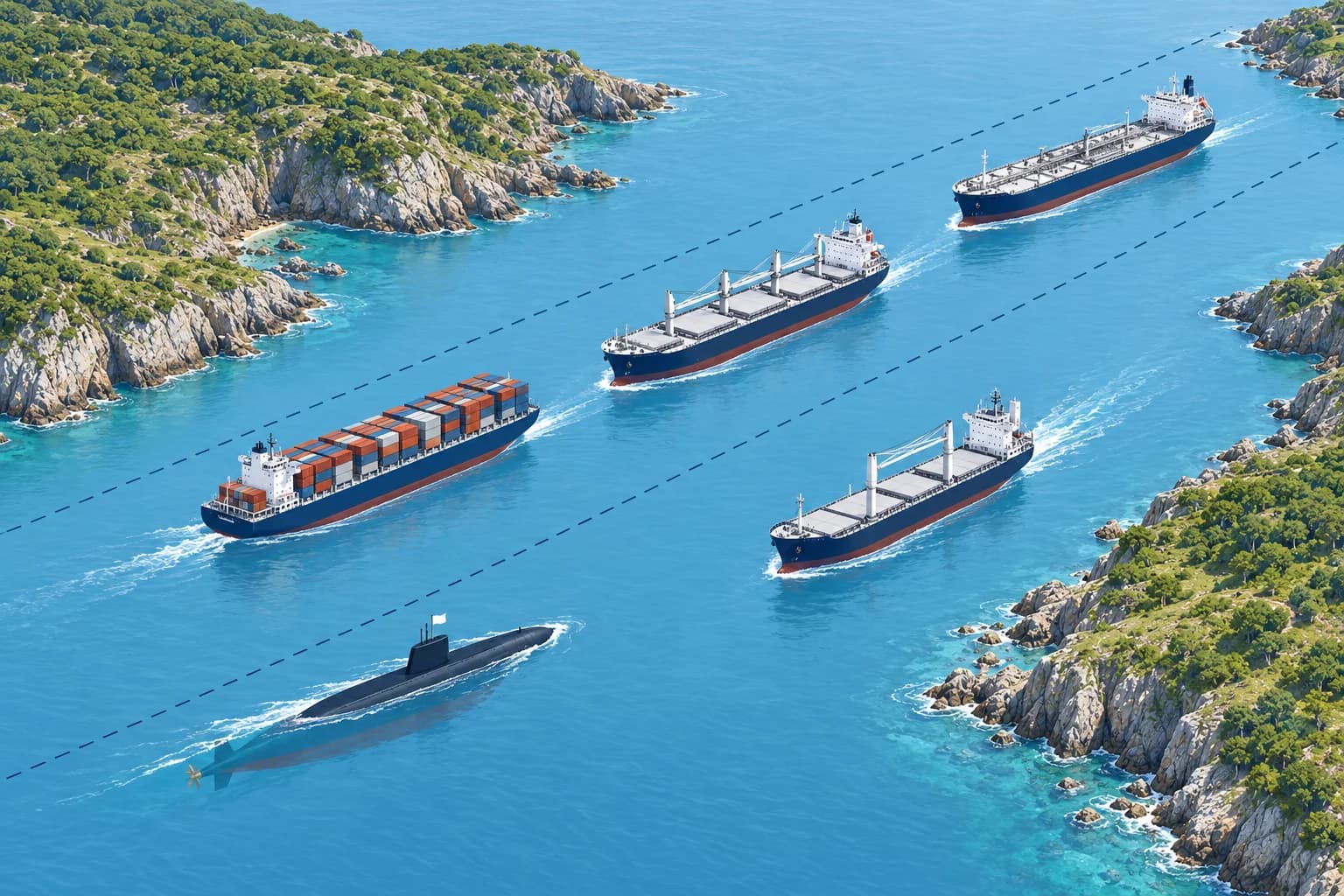
The policing rules of Ley 14/2014, the Maritime Navigation Act, apply to every ship in waters where Spain has sovereignty, sovereign rights or jurisdiction (Ley 14/2014, art. 4). They also apply to Spanish ships anywhere in the world, but other States' powers still count (Ley 14/2014, art. 5). In this unit, ship means buque and craft means embarcación, a vessel without a continuous deck or under 24 m. These Title I rules cover craft too, unless a rule says otherwise (Ley 14/2014, art. 6.2).
Sea zones
RDL 2/2011 is the Ports and Merchant Marine Act, a Real Decreto Legislativo, which is a decree with the force of law. Its art. 8 lists the sea zones. All distances run from the baselines, the lines along the coast where the zones start. Interior waters lie inside them. The territorial sea reaches 12 nautical miles (NM), the contiguous zone 24 NM and the exclusive economic zone (EEZ) 200 NM.
Innocent passage
Foreign ships in the territorial sea have innocent passage. It must be quick and continuous, and must not threaten Spain's peace, public order or security (Ley 14/2014, art. 37). Unauthorised research is not innocent. Nor is the passage of a damaged ship that seriously threatens the environment (Ley 14/2014, art. 39). The Government may suspend passage for a time, without discriminating between flags (Ley 14/2014, art. 42).
Foreign State ships
Foreign State ships, warships included, are immune from Spanish jurisdiction. They answer only to their flag State, apart from the exceptions in international law and in Ley 14/2014 (Ley 14/2014, art. 50). If a foreign warship in Spanish interior waters or the territorial sea breaks Ley 14/2014, the Armada (the Spanish Navy) calls on it to stop and, where appropriate, to leave without delay (Ley 14/2014, art. 54.1).
Entering Spanish ports
A foreign warship may enter interior waters and visit open ports only with Ministry of Defence authorisation, handled through diplomatic channels. Other foreign State ships need the authorisation of the maritime administration (the Dirección General de la Marina Mercante and the Capitanías Marítimas). Each is needed before every arrival (Ley 14/2014, art. 51.1). If damage, bad weather or another urgent cause forces a State ship into port for safety, no prior authorisation is needed. The commander informs the authorities without delay and follows their instructions (Ley 14/2014, art. 51.2).
Ships in port
Spanish civil and criminal courts have jurisdiction over foreign ships, except foreign State ships, while they are in national ports or other interior waters (Ley 14/2014, art. 12.1). Jurisdiction continues when the ship has left interior waters and is in the territorial sea, and when she is detained outside it in hot pursuit, the chase of a ship that broke the law in Spanish waters (Ley 14/2014, art. 12.3).
Key figures
- Territorial sea / contiguous zone
- 12 NM / 24 NM from baselines (RDL 2/2011, art. 8)
- Exclusive economic zone
- 200 NM from baselines (RDL 2/2011, art. 8)
- Foreign warship entry
- Ministry of Defence, diplomatic channels (Ley 14/2014, art. 51.1)
- Other foreign State ships
- Maritime administration, before arrival (Ley 14/2014, art. 51.1)
- Suspending passage
- Government, for a time, no flag bias (Ley 14/2014, art. 42)
Remember
- Innocent passage must be quick and continuous and must not threaten peace, public order or security.
- Foreign State ships, warships included, are immune from Spanish jurisdiction.
- A warship needs the Ministry of Defence; other State ships need the maritime administration.
- A forced arrival needs no prior authorisation, but the commander must inform the authorities.
- Court jurisdiction over a foreign ship continues into the territorial sea after she leaves port.
Common mistakes
Wrong: A foreign customs cutter needs the same Ministry of Defence authorisation as a warship.
Right: Only warships need the Ministry of Defence. Other foreign State ships need the maritime administration (Ley 14/2014, art. 51.1).
Wrong: Spanish courts lose jurisdiction the moment a foreign ship leaves port.
Right: Jurisdiction continues in the territorial sea, and if she is detained outside it in hot pursuit (Ley 14/2014, art. 12.3).
Worked case
A foreign warship in the Spanish territorial sea breaks Ley 14/2014. Later a foreign customs cutter, a State ship but not a warship, needs a port for urgent repairs after storm damage. A week later a foreign cargo ship leaves port after an incident on board. What applies to each?
Show the answer
The Armada calls on the warship to stop the breach and, where appropriate, to leave without delay (Ley 14/2014, art. 54.1). The cutter is in forced arrival: no prior authorisation, but her commander informs the authorities and follows instructions (Ley 14/2014, art. 51.2). Spanish courts keep jurisdiction over the cargo ship in the territorial sea (Ley 14/2014, art. 12.3).
Practice question
A foreign customs cutter, a State ship but not a warship, wants to enter a Spanish port in a non-emergency case. Who authorises it?
- The Ministry of Defence, by diplomatic channels
- The maritime administration, before her arrival
- The Port Authority alone, on the day
- The Ministry of Foreign Affairs, by note
Show the answer
Answer: B. Ley 14/2014, art. 51.1: warships need the Ministry of Defence. Other State ships need the maritime administration.
2 · Entry and salvage
Entry, refuge and salvage
Entry is treated as authorised unless refused, but listed ships need express permission. A master must help people in danger, and salvage has its own rules.
Permission to enter
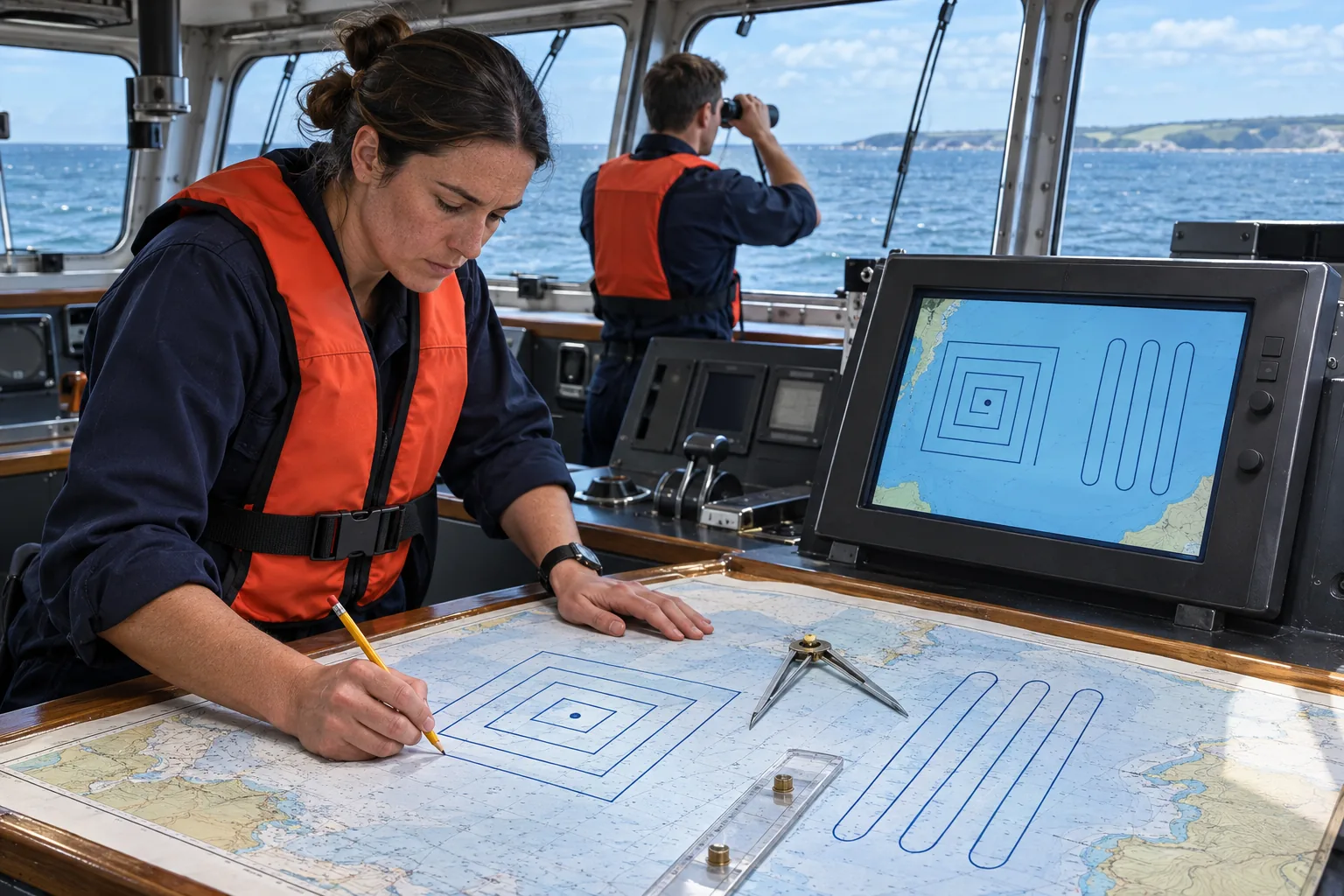
This is a different question from clearance to sail. RONM is the Reglamento de Ordenación de la Navegación Marítima, RD 186/2023. Under RONM art. 27.1, a ship or craft entering Spanish maritime spaces is treated as authorised unless the Capitanía Marítima, the local maritime office, expressly denies it. That applies to innocent passage, to a ship bound for port that has filed its integrated port-call request, and to waters with freedom of navigation.
Express entry
RONM art. 28 lists the ships that need express entry authorisation, for example ships with a breakdown, shifted cargo, fire or flooding, certain dangerous goods, or one that has asked for assistance or refuge. The Capitanía Marítima grants it, except for assistance or refuge, which the Director General de la Marina Mercante grants (RONM arts. 28.d and 3.2.a). Entry can also be prohibited (RONM art. 30).
The 48 hours
When authorisation is needed, the request is made at least 48 hours before arrival in Spanish maritime spaces (RONM art. 29.1). Filing it outside that period is a serious offence (RONM art. 54.1.g). RONM art. 29.1 gives no shorter period for ships in difficulty, and this lesson does not say how the 48 hours applies to a casualty.
Refuge and forced arrival
A place of refuge is a sheltered place where a ship in trouble can be made safe. In arribada forzosa (forced arrival, an unplanned entry to port in an emergency), the owner, master or consignee (the ship's agent) tells the maritime administration why, and it checks the reasons (Ley 14/2014, the Maritime Navigation Act, art. 9).
A master's duties
A master must go to the aid of people in danger at sea unless this would put the ship, crew or passengers in grave danger, and must record it in the Diario de Navegación, the navigation log (Ley 14/2014, art. 183.3). Nobody with an interest in ship or cargo may obstruct a decision the master judges necessary for life or the marine environment (Ley 14/2014, art. 184.1). The master of a Spanish ship reports accidents at once to the nearest Capitanía or consul (Ley 14/2014, art. 186.1).
Salvage
Salvage is any act to help a ship, craft or floating device in danger, or to safeguard other property in danger, in navigable waters (Ley 14/2014, art. 358.1). A useful result gives a right to an award, capped at the value saved (Ley 14/2014, art. 362.1). In Spanish maritime spaces the maritime administration may direct operations, and its instructions bind master, owner, shipper and salvor (Ley 14/2014, art. 367.1). An authority that only orders or supervises gets no award (Ley 14/2014, art. 360).
Key figures
- Refuge decision
- Director General de la Marina Mercante (RONM arts. 3.2.a, 28.d)
- Express entry request
- At least 48 h before arrival in Spanish spaces (RONM art. 29.1)
- Filing out of time
- Outside that period: serious offence (RONM art. 54.1.g)
- Declaring an accident
- Within 24 working hours of a Spanish port (Ley 14/2014, art. 186.2)
- Salvage award
- Cannot exceed the value saved (Ley 14/2014, art. 362.1)
Remember
- Entry is treated as authorised unless the Capitanía expressly denies it (RONM art. 27.1).
- RONM art. 28 lists ships that need express entry authorisation from the Capitanía.
- The Director General decides requests for assistance or refuge.
- A master must aid people in danger unless that puts ship, crew or passengers in grave danger.
- Instructions of the maritime administration in a salvage bind master, owner, shipper and salvor.
Common mistakes
Wrong: The Capitán Marítimo grants a ship's request for refuge.
Right: The Director General de la Marina Mercante grants it (RONM arts. 3.2.a and 28.d).
Wrong: A shipowner can tell the master to ignore a safety decision and keep to schedule.
Right: The owner, charterer and anyone with an interest in ship or cargo must not obstruct it (Ley 14/2014, art. 184.1).
Wrong: Any salvage effort earns an award, even against the master's refusal.
Right: Services given despite an express and reasonable prohibition by the owner or master give no right to an award (Ley 14/2014, art. 364).
Worked case
A foreign ship carrying explosives, bound for a Spanish port, needs express entry authorisation. A second ship, flooding, asks for assistance and refuge. The master of a passing Spanish ship hears a yacht's distress call, but her owner wants her to keep to schedule. Who grants each entry, and what must that master do?
Show the answer
The Capitanía Marítima grants entry to the ship carrying explosives, on a request at least 48 hours before arrival (RONM arts. 28.a and 29.1). The Director General de la Marina Mercante decides the flooding ship's request (RONM arts. 3.2.a and 28.d). The master must go, unless this puts ship, crew or passengers in grave danger, and record it in the Diario de Navegación (Ley 14/2014, art. 183.3). The owner may not obstruct that (Ley 14/2014, art. 184.1).
Practice question
A foreign ship has requested assistance or refuge in Spanish waters and needs express entry authorisation. Who grants it?
- The Capitán Marítimo of the nearest Capitanía
- The Director General de la Marina Mercante
- The director of the nearest Port Authority
- The regional government's emergency coordinator
Show the answer
Answer: B. RONM arts. 3.2.a and 28.d give requests for assistance or refuge to the Director General de la Marina Mercante, not the Capitán Marítimo.
3 · Visit and boats
Visit, contiguous zone and prohibited boats
In the contiguous zone Spain can stop a ship it knows is breaking certain laws. Some inflatable and semi-rigid boats are prohibited goods even with no cargo aboard.
Visit and hot pursuit
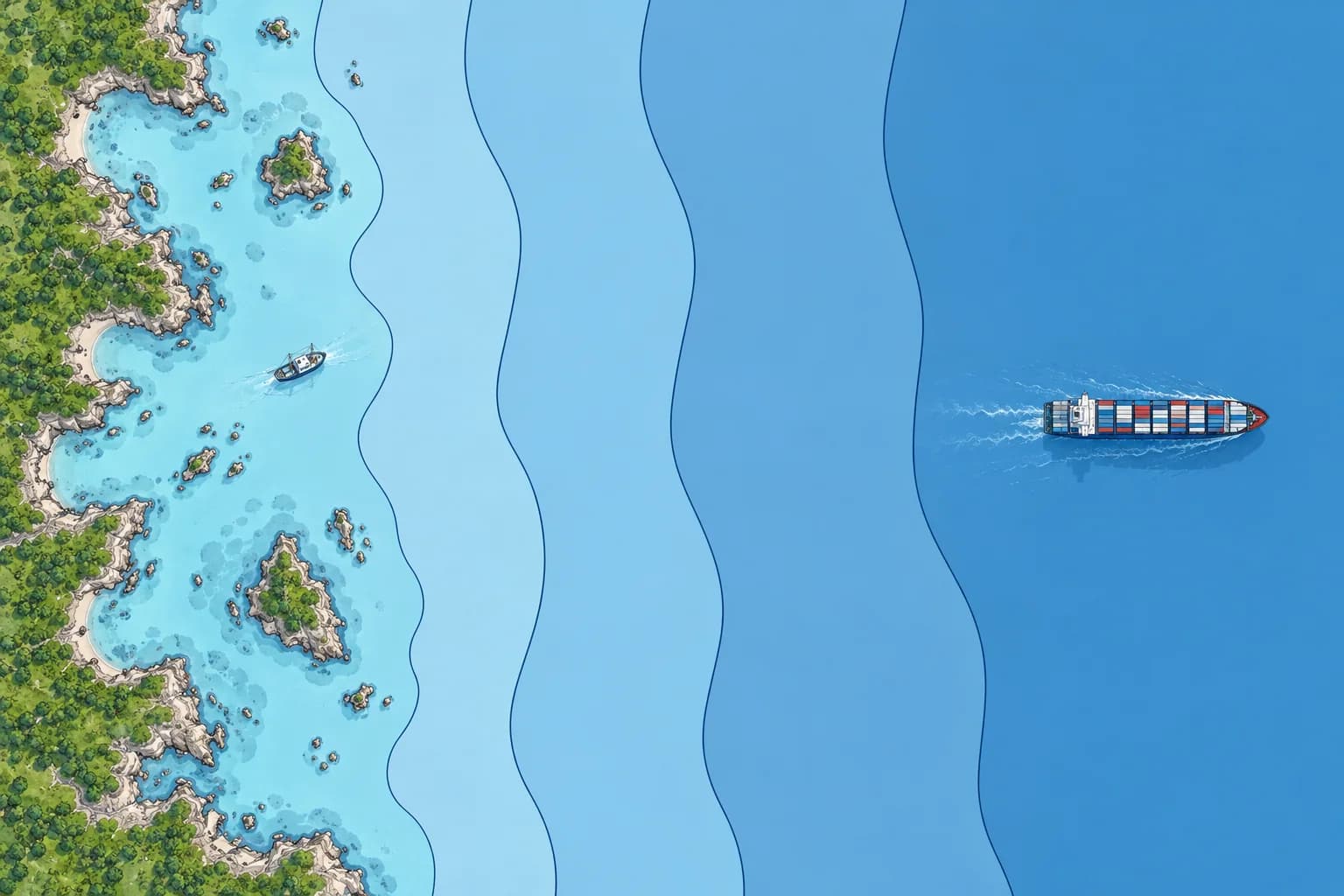
A visit is a boarding to check a foreign ship, for example her flag and papers. Hot pursuit is the chase of a ship that broke the law in Spanish waters, and it may continue out to sea. Ley 14/2014, the Maritime Navigation Act, art. 48 sends you to UNCLOS (the UN Convention on the Law of the Sea) and other treaties for the grounds and method. A detained ship may be taken to the nearest Spanish port (Ley 14/2014, art. 49).
Contiguous zone
The contiguous zone reaches 24 nautical miles (NM). There, Spain can intercept, inspect and detain a foreign ship that the authority knows has broken, is breaking or intends to break customs, tax, health or immigration law in Spanish territory or the territorial sea (Ley 14/2014, arts. 23 and 35). Proportionate measures may include detention and taking her to port. Needless detentions must be compensated (Ley 14/2014, art. 36).
Prohibited by size and power
Real Decreto-ley 16/2018 is a decree-law made by the government. For smuggling law, it treats two kinds of inflatable or semi-rigid boat as prohibited goods: boats over 8 m long, and boats up to 8 m with engines totalling 150 kW or more. Length is overall hull length, including the tubes. This covers building, repair, holding, trading and navigating them in interior waters, the territorial sea or the contiguous zone.
Prohibited by indications
Other inflatable or semi-rigid boats, other craft and any small ship (buque de porte menor, under 150 net tons) are prohibited goods when rational indications show they will be used for smuggling (Real Decreto-ley 16/2018, art. único 1.b). Unless the contrary is shown, that intent is presumed for: registration failures; significant changes, such as more power or extra range tanks, not authorised by the Dirección General de la Marina Mercante; false bottoms or hidden spaces; tampering with visual, acoustic or positioning systems.
More indications
Real Decreto-ley 16/2018, art. único 1.b lists three more. Letter v: sailing without the required lights or on an erratic course, while ignoring identified State vessels, especially an order to stop. Letter vi: a clear mismatch between the declared route or activity and the nautical equipment, crew or passengers on board. Letter vii: gear that hinders detection, such as anti-radar paint or camouflage mimicking State markings.
Exemptions
Boats of the armed and security forces, Vigilancia Aduanera, foreign States legally in Spanish waters and public bodies are exempt, as are tenders serving a larger ship. Other uses need the operator and boat entered first in the Tax Agency's special registry, plus a use authorisation (RD 807/2021). These uses are rescue, lakes, rivers or waters outside Spanish maritime spaces, business, sport, research, training, and private recreation that meets the technical rules (Real Decreto-ley 16/2018).
Key figures
- Contiguous zone
- 24 NM; customs, tax, health, immigration (Ley 14/2014, arts. 23, 35)
- Prohibited by size
- Over 8 m (Real Decreto-ley 16/2018)
- Prohibited by power
- Up to 8 m with 150 kW or more in total (Real Decreto-ley 16/2018)
- Small ship (buque de porte menor)
- Under 150 net tons (Real Decreto-ley 16/2018)
- Registry and use authorisation
- Tax Agency special registry (RD 807/2021)
Remember
- Ley 14/2014, art. 48 points to UNCLOS and treaties for visit and hot pursuit; it adds no new grounds.
- In the contiguous zone, Spain acts on customs, tax, health or immigration breaches it knows of.
- Over 8 m, or up to 8 m with 150 kW or more: prohibited goods, even with no cargo aboard.
- Below that test, rational indications of smuggling can still make a vessel prohibited goods.
- Listed indications are a presumption that can be rebutted, not proof.
Common mistakes
Wrong: Ley 14/2014 sets its own stand-alone rules on hot pursuit.
Right: Ley 14/2014, art. 48 refers to UNCLOS and the applicable treaties. Ley 14/2014, art. 49 adds that the detained ship may go to the nearest Spanish port.
Wrong: Anyone can use any inflatable or semi-rigid boat, provided no contraband is aboard.
Right: Under Real Decreto-ley 16/2018, the boats it describes are prohibited goods even without cargo, unless an exemption applies. Some exemptions need a Tax Agency registry entry.
Wrong: The 1989 high-speed craft decree still sets the rules for fast boats.
Right: RD 186/2023 repealed RD 1119/1989. Use Real Decreto-ley 16/2018 and RD 807/2021 for inflatable and semi-rigid boats.
Worked case
A patrol vessel sights an unlit foreign-flag semi-rigid boat, 7 m long with one 100 kW engine, 18 NM off Cádiz and heading for the coast. No cargo is in view. Her crew ignores an order to stop from an identified patrol vessel. Can she be stopped, on what basis, and would your answer change at 30 NM?
Show the answer
At 18 NM she is in the contiguous zone. Size and power give no basis. But no lights while ignoring an order to stop is a listed indication, so smuggling is presumed unless the contrary is shown (Real Decreto-ley 16/2018, art. único 1.b). If that meets the knowledge test of Ley 14/2014, art. 35, Spain may intercept, inspect and detain her. At 30 NM neither applies: visit and pursuit depend on UNCLOS and treaties (Ley 14/2014, art. 48).
Practice question
A foreign cargo ship on passage through the Spanish contiguous zone shows no link to any customs, tax, health or immigration breach. May Spain stop and inspect her under Ley 14/2014?
- Yes, it may board any foreign ship there for routine checks
- Yes, but only with the written consent of the flag State
- No, unless the authority knows of such a breach or intent
- No, the zone gives Spain no powers at all over foreign ships
Show the answer
Answer: C. Ley 14/2014, art. 35.1 gives the right to intercept, ask for information or inspect only on that knowledge.
4 · Offences, holding
Offences, fines and holding a ship
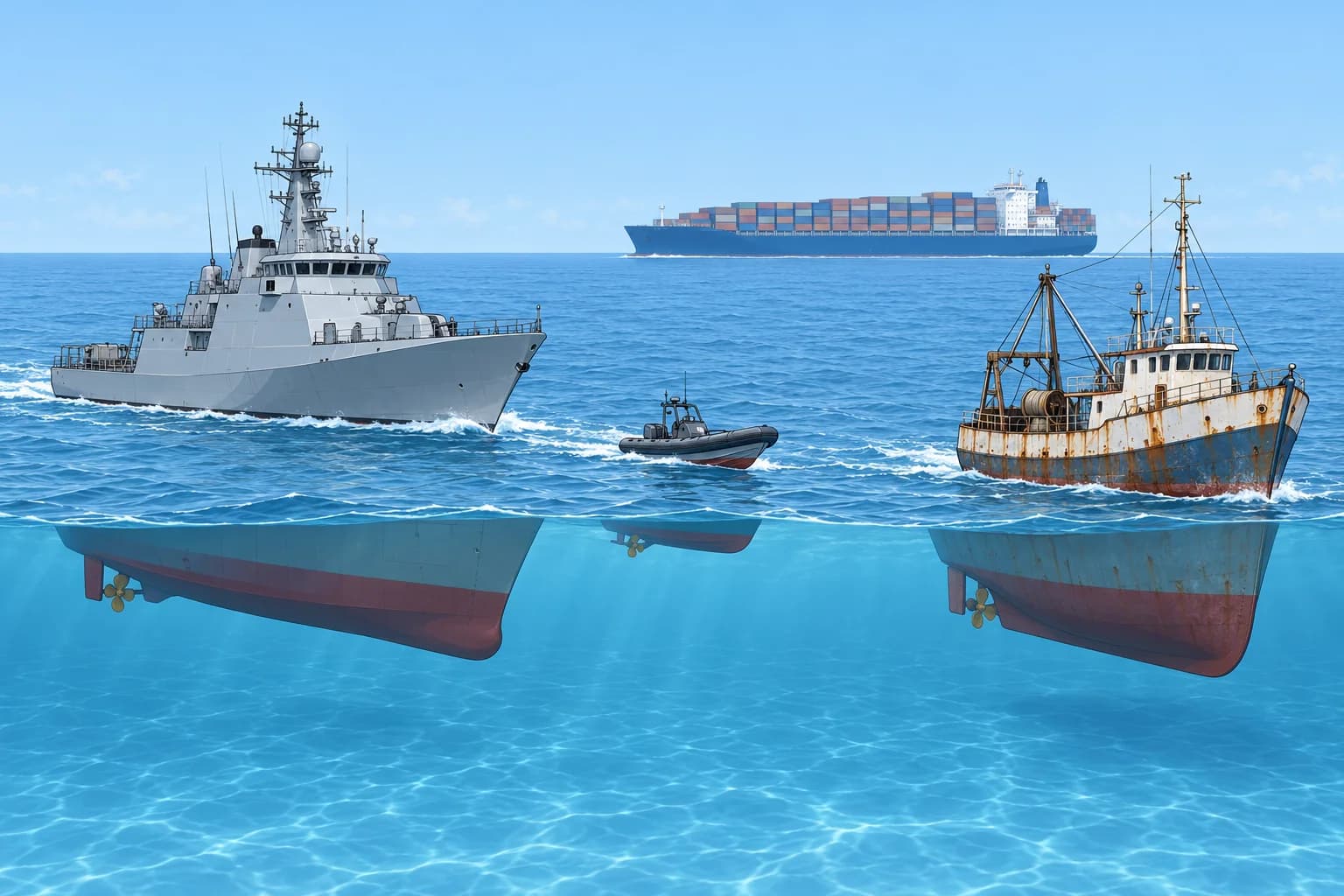
Spanish law sorts offences into minor, serious and very serious. Safety offences cost more than traffic offences, and a ship can be held in three ways.
Three grades
Offences are minor, serious or very serious (RDL 2/2011, art. 305). RDL 2/2011 is the Ports and Merchant Marine Act, a Real Decreto Legislativo, which is a decree with the force of law.
Traffic offences
Serious traffic offences include breaking the rules on using the national flag (RDL 2/2011, art. 307.3.a), ignoring Capitanía Marítima instructions on manoeuvres and navigation (RDL 2/2011, art. 307.3.e) and breaking the rules on ship clearance (RDL 2/2011, art. 307.3.g). Giving false information that must be supplied to the maritime administration is very serious (RDL 2/2011, art. 308.3.e). The highest fine is €120,000 if serious and €300,000 if very serious (RDL 2/2011, art. 312).
Serious safety offences
Offences against maritime safety carry higher maximum fines: up to €180,000 if serious (RDL 2/2011, art. 312.2.b). Examples are going beyond the limits of a professional or recreational title, or letting someone without enough title act as master or skipper (RDL 2/2011, art. 307.2.h); a crew member acting while impaired by alcohol or drugs (RDL 2/2011, art. 307.2.d); and not reporting a maritime accident or incident (RDL 2/2011, art. 307.2.n).
Very serious safety offences
The fine reaches €901,000 (RDL 2/2011, art. 312.3.b). Examples are a master or skipper acting while impaired by alcohol or drugs (RDL 2/2011, art. 308.2.i), and a master or crew member who does not give help, or refuses it, when it is requested or seems to be needed (RDL 2/2011, art. 308.2.j).
Losing the title
For serious or very serious safety offences, the authority may also suspend the título profesional, the professional title: up to one year if serious, one to five years if very serious (RDL 2/2011, art. 312.10). That article names only the professional title.
Holding a ship
RDL 2/2011, art. 320 gives three routes. First, the Capitán Marítimo can order it at once, but only to secure the pollution-damage obligations in RDL 2/2011, art. 310.2.d. Second, during proceedings for a serious or very serious offence, the body with the power to punish can order it and must give reasons. In both cases a sufficient guarantee can replace the holding. Third, exceptionally, when retention must take effect at once as a precaution, the Director of the Port Authority may impose it.
Key figures
- Serious traffic offence, cap
- €120,000 (RDL 2/2011, art. 312.2.c)
- Very serious traffic offence, cap
- €300,000 (RDL 2/2011, art. 312.3.c)
- Serious safety offence, cap
- €180,000 (RDL 2/2011, art. 312.2.b)
- Very serious safety offence, cap
- €901,000 (RDL 2/2011, art. 312.3.b)
- Title suspension
- Up to 1 year; 1 to 5 years if very serious (RDL 2/2011, art. 312.10)
- Retention of ships
- Three routes (RDL 2/2011, art. 320)
Remember
- Traffic caps: €120,000 serious, €300,000 very serious.
- Safety caps: €180,000 serious, €901,000 very serious.
- Ignoring Capitanía instructions (art. 307.3.e of RDL 2/2011) is a serious traffic offence.
- Failing to give help that is requested or seems needed is a very serious safety offence.
- RDL 2/2011, art. 320: Capitán Marítimo, punishing body, or exceptionally the Port Authority Director.
Common mistakes
Wrong: The Capitán Marítimo can hold a ship at once for any offence.
Right: That route only secures the pollution-damage obligations in RDL 2/2011, art. 310.2.d. Holding during proceedings is ordered, with reasons, by the body with the power to punish (RDL 2/2011, art. 320).
Wrong: A held ship must stay held until the proceedings end, whatever the owner offers.
Right: On the Capitán Marítimo and punishing-body routes, a sufficient guarantee can replace the holding (RDL 2/2011, art. 320).
Wrong: All serious offences share one €120,000 cap.
Right: That cap is for traffic offences (RDL 2/2011, art. 312.2.c). Serious safety offences reach €180,000 (RDL 2/2011, art. 312.2.b).
Worked case
A master ignores Capitanía instructions on manoeuvres. A month later, the same master takes the ship beyond the limits of the professional title, and proceedings open. The owner fears the ship will be held and offers a bank guarantee. How is each act classed, what are the maximum fines, and does the guarantee help?
Show the answer
Ignoring instructions is a serious traffic offence, up to €120,000 (RDL 2/2011, arts. 307.3.e and 312.2.c). Exceeding the title is a serious safety offence, up to €180,000, and the title may be suspended for up to one year (RDL 2/2011, arts. 307.2.h, 312.2.b and 312.10). During proceedings, the body with the power to punish may hold the ship, giving reasons, and a sufficient guarantee can replace the holding (RDL 2/2011, art. 320).
Practice question
A ship's master takes the vessel beyond the limits of the professional title. How does Spain's RDL 2/2011 class this, and what is the most serious extra consequence?
- A minor offence, with a warning only
- A serious traffic offence, up to €120,000, with no effect on the title
- A serious safety offence, up to €180,000, title suspended up to one year
- A very serious safety offence, up to €901,000, title suspended 1 to 5 years
Show the answer
Answer: C. RDL 2/2011, art. 307.2.h makes it a serious offence against maritime safety. RDL 2/2011, art. 312.2.b caps the fine at €180,000, and RDL 2/2011, art. 312.10 allows suspension of up to one year.