
Navigation · Level P2 · 5 parts · about 17 min
Near-coastal passages and the navigational watch on ships under 500 GT
5 short parts: II/3 certificate · Watch and rest · Taking over · Call the master · Coastal and anchor. Each part explains the idea, then gives the points to remember, the common mistakes, a worked case and a practice question; the Academy unit adds all 32 check questions.
1 · II/3 certificate
The II/3 certificate and near-coastal voyages
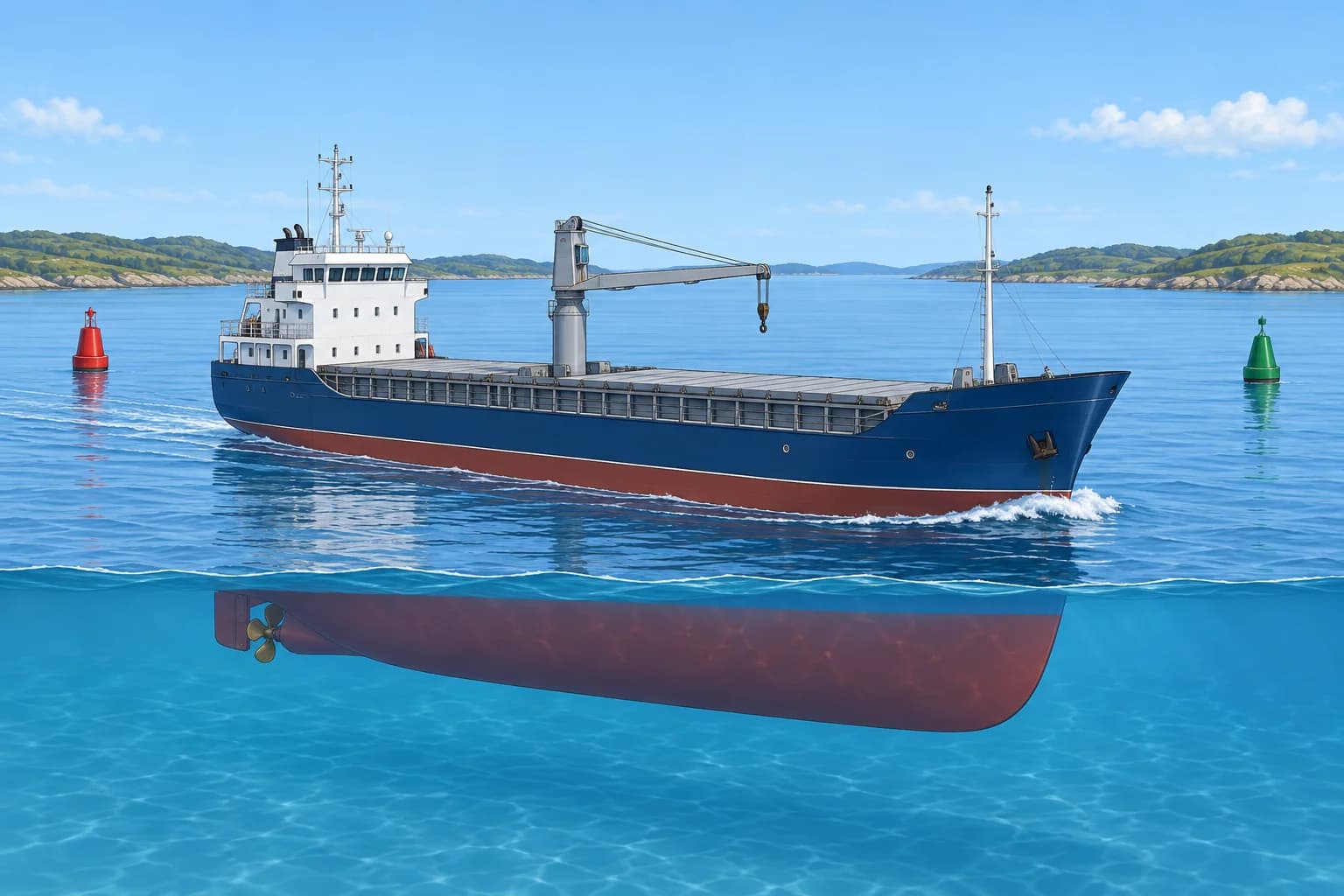
STCW regulation II/3 certifies officers of the watch and masters on ships under 500 GT on near-coastal voyages, an area each country defines.
What II/3 covers
The STCW Convention sets world minimum standards for training, certification and watchkeeping. Regulation II/3 covers two certificates for seagoing ships of less than 500 gross tonnage (GT) on near-coastal voyages: the officer in charge of a navigational watch (OOW) and the master. GT measures enclosed volume. A ship under 500 GT that trades beyond near-coastal limits needs the full certificates instead: an OOW certificate for ships of 500 GT or more, and a master's certificate for ships of 500 to 3,000 GT.
Near-coastal limits
STCW defines near-coastal voyages only as voyages in the vicinity of a Party, as that Party defines them. A Party is a state that has accepted the Convention. So the limits are national: one state draws them as a distance from a safe haven, another along its own coastline. Regulation I/3 lets states agree limits with each other for ships trading between them. Your certificate states the limits that apply. Read them before you accept a ship or a voyage.
The OOW route
The STCW minimum for a near-coastal OOW is an age of at least 18 and either special training with the sea service your flag state's maritime authority requires, or at least 36 months of approved sea service in the deck department. You must meet the competence standard in section A-II/3 of the STCW Code and hold the basic safety training of chapter VI. Many states add their own courses, exams and sea time on top.
The master route
For master of a ship under 500 GT on near-coastal voyages, the STCW minimum is an age of at least 20 and at least 12 months of approved sea service as OOW, plus the master's standard in section A-II/3. On such ships the master often keeps a watch as well. That makes the master both the person who writes the bridge orders and one of the people who follow them.
Same watch rules
A smaller ship and a shorter trade do not mean lighter watch rules. The principles in section A-VIII/2 of the STCW Code, the hours of rest in section A-VIII/1 and the COLREG apply in full. The rest of this unit is those principles, seen from a small ship's bridge.
Key figures
- Ships covered
- Less than 500 GT on near-coastal voyages (STCW reg. II/3)
- Near-coastal limits
- Set by each Party (STCW reg. I/1 and I/3); stated on the certificate
- OOW minimum
- Age 18; special training or 36 months' approved deck service
- Master minimum
- Age 20; 12 months' approved sea service as OOW
- Competence standard
- STCW Code section A-II/3 (OOW and master)
Remember
- The near-coastal II/3 certificates covered here are for ships under 500 GT on near-coastal voyages.
- Each Party defines its own near-coastal limits; your certificate states them.
- Beyond those limits, even a small ship needs the full II/1 or II/2 certificates.
- The full A-VIII/2 watch principles and A-VIII/1 rest hours still apply on small ships.
Common mistakes
Wrong: Near-coastal means the same distance from the coast in every country.
Right: Each Party defines its own near-coastal limits. Read the limits on your certificate and the flag state's rules.
Wrong: Under 500 GT, a II/3 certificate covers any voyage.
Right: Outside near-coastal limits, a ship under 500 GT needs officers with the full certificates for ships of 500 GT or more.
Worked case
You hold a II/3 master's certificate for near-coastal voyages under 500 GT. Your company asks you to take a 480 GT coaster on a delivery voyage well beyond your flag state's near-coastal limits. What do you check?
Show the answer
Your certificate does not cover that voyage. Beyond near-coastal limits, the master of a ship under 500 GT needs a certificate for ships of 500 to 3,000 GT, and the OOW needs an OOW certificate for ships of 500 GT or more. Check the limits on your certificate and the flag state's rules, and tell the company before you accept.
Practice question
Who defines the limits of near-coastal voyages under STCW?
- IMO, in a single worldwide table
- Each Party, for voyages in its vicinity
- The ship's classification society
- The port state at each port the ship visits
Show the answer
Answer: B. STCW defines near-coastal voyages as voyages in the vicinity of a Party, as defined by that Party.
2 · Watch and rest
Watch arrangements, lookout and fitness for duty
The master sets a watch that can always keep a proper lookout. The OOW may be sole lookout only by day, after a careful check, with help on call.
Composition of the watch
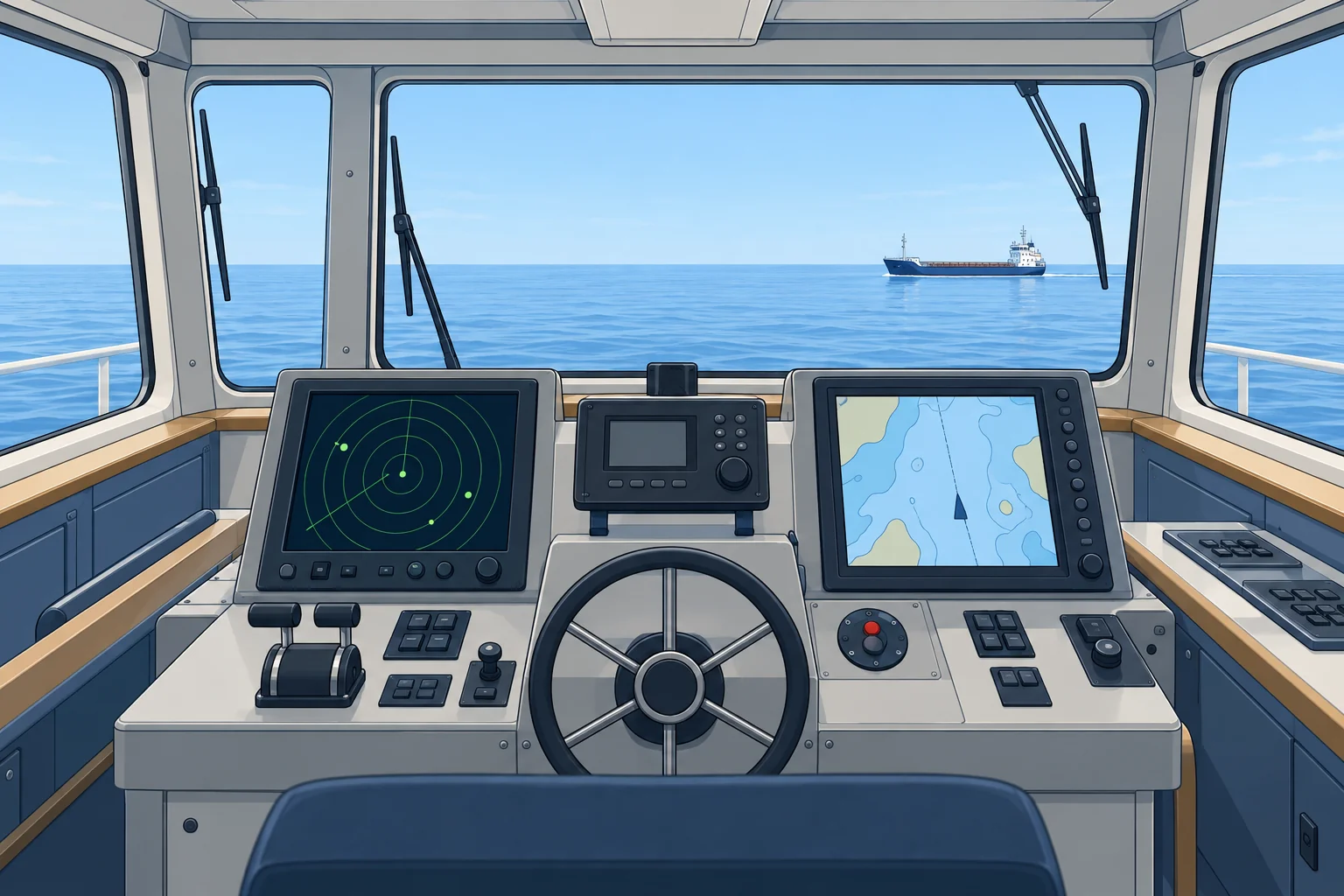
The master sets the bridge team and reviews it as conditions change. Consider visibility, weather and daylight; traffic and dangers; extra navigation, radio or machinery-alarm duties; automatic steering; radar, the electronic chart display and information system (ECDIS) and other aids; and each watchkeeper's fitness and experience. Never leave the bridge unattended. As OOW, remain on the bridge until another qualified OOW properly relieves you. A lookout alone cannot relieve you.
The lookout
A proper lookout, as COLREG Rule 5 requires, is kept by sight, hearing and all available means, and no other duty may interfere with it. The helmsperson is not the lookout while steering. The exception is a small ship with an unobstructed all-round view from the helm, unimpaired night vision and no other lookout impediment. How a lookout reports is covered in Lookout duties.
Sole lookout by day
The OOW may be the sole lookout in daylight, but on each occasion only if: the situation has been carefully assessed and it is established without doubt that it is safe; weather, visibility, traffic, nearby dangers and traffic separation schemes have all been taken into account; and assistance can be summoned to the bridge at once. At night, in poor visibility or in heavy traffic, post a separate lookout. Company rules may be stricter.
Rest and fitness
STCW A-VIII/1 gives every watchkeeper at least 10 hours of rest in any 24 hours and 77 hours in any 7 days. Daily rest may be split into no more than two periods, one at least 6 hours long, with no more than 14 hours between them. Record rest hours. The STCW ceiling is 0.05 % blood alcohol or 0.25 mg/l in breath; stricter limits may apply. In an emergency the master may suspend the schedule; afterwards, those who worked through rest get adequate rest.
The watch alarm
The bridge navigational watch alarm system (BNWAS) monitors bridge activity. SOLAS V/19 requires it on cargo ships of at least 150 GT and all passenger ships, operating under way at sea. After 3–12 minutes without a reset: a visual alarm on the bridge; 15 seconds later, a bridge audible alarm; 15 seconds later, master/back-up officer alarm; after another 90 seconds unanswered, further crew (up to 3 minutes on larger ships). On ships other than passenger ships, the remote stages may sound in all locations at once. Never bypass the reset.
Key figures
- Minimum rest
- 10 h in any 24 h and 77 h in any 7 days (STCW A-VIII/1)
- Splitting daily rest
- Max 2 periods, one at least 6 h; at most 14 h between them
- STCW alcohol ceiling
- 0.05 % blood alcohol or 0.25 mg/l breath; stricter limits may apply
- BNWAS carriage
- Cargo ships of 150 GT or more; all passenger ships (SOLAS V/19)
- BNWAS sequence
- 3–12 min; light → bridge alarm → back-up/master → further crew
Remember
- The bridge is never left unattended.
- The OOW may be sole lookout only in daylight, after a careful check, with help on call at once.
- Helmsperson as lookout: small ship, unobstructed all-round view at the helm, unimpaired night vision, no other lookout impediment.
- Daily rest: 10 h, split into at most two periods, one at least 6 h. Weekly rest: 77 h in any 7 days.
- The BNWAS stays on whenever the ship is under way at sea.
Common mistakes
Wrong: On a small ship the OOW can be the lookout at night if the radar is working.
Right: The sole-lookout allowance is for daylight only. At night, post a lookout and use the radar as well.
Wrong: Rest hours are a paperwork issue; you can catch up at the next port.
Right: The minimums apply in any 24 hours and any 7 days. A tired OOW is a navigational hazard; tell the master before the watch.
Wrong: The BNWAS can be switched off on a calm coastal passage.
Right: SOLAS requires it to be in operation whenever the ship is under way at sea.
Worked case
You are mate on a 420 GT coaster where you and the master stand 6 hours on, 6 hours off. After your night watch you supervised cargo all morning. Sailing is at 1200 and your watch starts then, but you have had only 5 hours of rest in the last 24.
Show the answer
You are below the STCW minimum of 10 hours in any 24, and fatigue makes you a hazard on the bridge. Tell the master before sailing. The master must rearrange the watch: delay sailing, take the watch with you resting first, or bring in another qualified officer. Record the hours honestly; the record shows where the schedule needs to change.
Practice question
When may the OOW be the sole lookout?
- In daylight, after a careful check, with help on call
- At night, when the radar and ARPA are both working
- At any time, when the ship is under 500 GT
- In restricted visibility, when fog signals are sounding
Show the answer
Answer: A. STCW allows it in daylight only, each time after a careful assessment, and with assistance immediately available.
3 · Taking over
Taking over the watch and the master's orders
Arrive early, let your eyes adjust and check the position, plan and traffic yourself. Never take over in the middle of a manoeuvre.
Ready to relieve
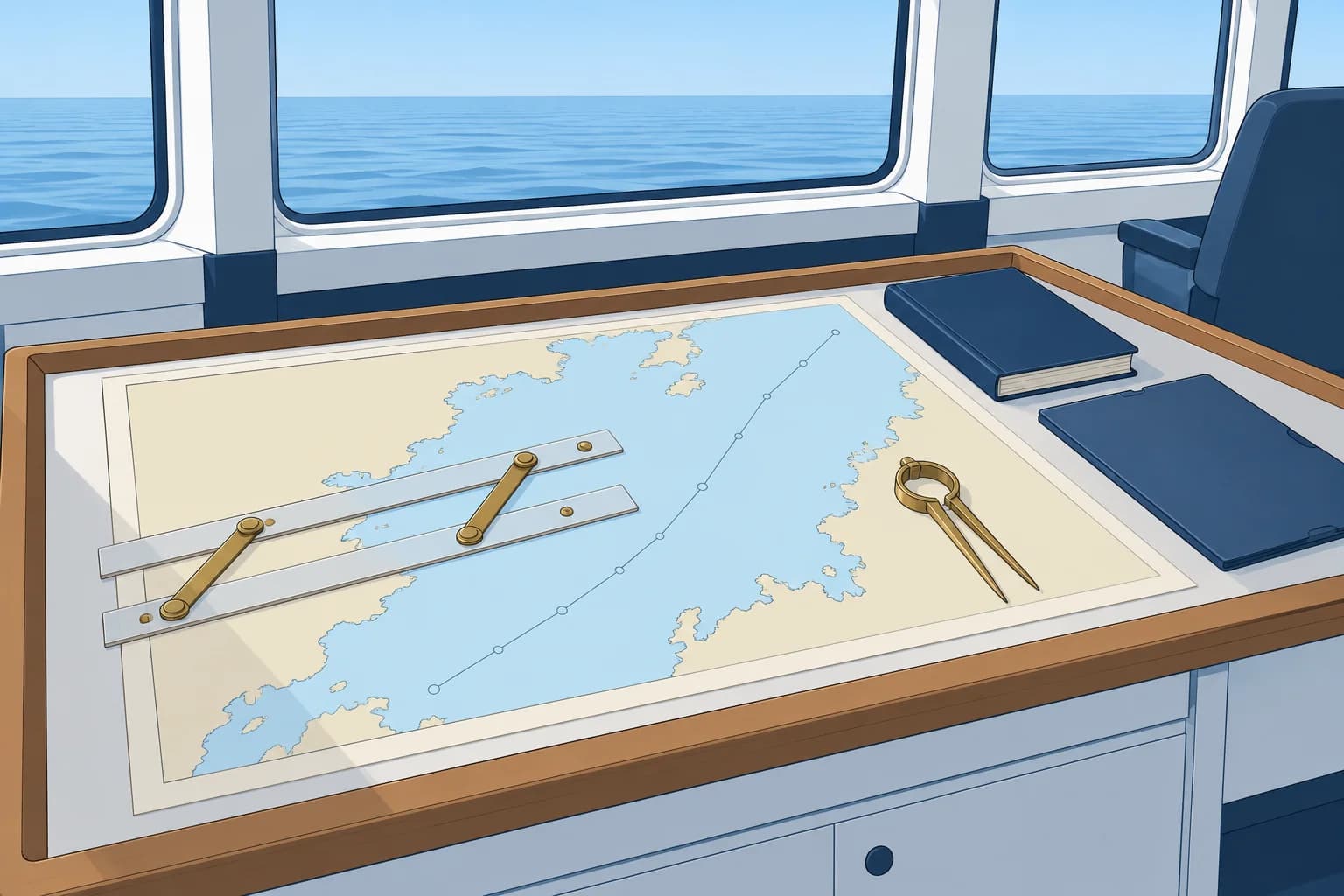
Arrive early and fit for duty. Do not take over until your eyes are fully adjusted; at night, allow roughly 20–30 minutes after bright light, and longer if needed. Check that every member of your incoming watch is fit and has adjusted night vision. The outgoing OOW must not hand over to a relief who seems unable to keep the watch through tiredness, illness or drink, and must tell the master.
What you check
Read the master's standing orders, night orders and special instructions. Personally check position, intended track, course, speed and draught, the hull's depth below the waterline; present and forecast tides, currents, weather and visibility; traffic and expected hazards; bridge engine-control procedures and unattended machinery space (UMS) controls where fitted; operating condition of all navigation and safety equipment in use or likely to be used; and gyro and magnetic compass errors. Check under-keel clearance, the water between keel and seabed, including the effects described next.
Clearance checks
Heel is sideways lean; trim is the difference between forward and aft draughts. Squat is extra sinkage and change of trim when moving through water. Changes in water density also change draught. Before accepting the watch, check how these affect your under-keel clearance.
Not during a manoeuvre
If a manoeuvre or other action to avoid a hazard is under way at changeover time, the relief is deferred until that action is complete. The outgoing OOW keeps the watch; the relief can help as lookout. Then hand over at a quiet moment with clear words, for example 'You have the watch', and log the time. The rating's view of the same handover is in Watch ratings.
Standing and night orders
The master's standing orders set the rules for every watch: when to call the master, minimum passing distances, fixing intervals, use of engines and steering. Each OOW reads and signs them on joining. Night orders are written each evening for that night: expected landfall, traffic, weather and extra call points. Read and sign them before taking over. Night orders normally add instructions for that night. If they appear to conflict with standing orders, ask the master to clarify before taking over.
The master on the bridge
As OOW, you keep responsibility for the navigational watch even with the master on the bridge, until the master clearly takes over and both of you understand it. The master's overall responsibility continues throughout. On a small ship the master often comes up for a look. Ask rather than guess: 'Captain, are you taking over responsibility for the navigational watch?' Confirm the answer explicitly.
Taking over a navigational watch
- Arrive early and let your eyes adjust to the light. — STCW forbids taking over before your vision is fully adjusted.
- Read the standing orders, night orders and any special instructions. — They set the call points and limits for your watch.
- Check the position, the plan ahead, course, speed and draught. — You must know where the ship is and where the dangers are.
- Check present and forecast conditions, UMS controls where fitted, and equipment needed during the watch. — These change how the ship follows her track and what you can rely on.
- Compare nearby ships' positions and movements and review collision risks with the outgoing OOW. — You need a shared traffic picture before taking responsibility.
- Take over with clear words at a quiet moment, then log the time. — Responsibility must pass openly, never in the middle of a manoeuvre.
Remember
- Do not take over until your eyes have fully adjusted to the light.
- Check position, plan, traffic, weather, compass errors and under-keel clearance yourself.
- If a manoeuvre is under way, the relief waits until it is complete.
- Night orders normally add to standing orders. Read and sign both; ask the master to clarify any apparent conflict.
- With the master on the bridge, you keep the watch until the master clearly takes over.
Common mistakes
Wrong: The outgoing OOW's summary is enough; you can check the details later.
Right: STCW says the relief shall personally satisfy themselves about position, plan, traffic and conditions before taking over.
Wrong: Once the master is on the bridge, the master is in charge.
Right: The OOW keeps responsibility for the navigational watch until the master clearly takes over and both understand it.
Worked case
At 2358 you arrive to relieve the watch. The OOW is altering course to starboard for a crossing ship 2 miles off on the starboard bow, and says 'Quick, you have it, I'm off.' What do you do?
Show the answer
Do not take over. A manoeuvre to avoid a hazard is in progress, so the relief is deferred until it is complete. Act as an extra lookout, let your eyes adjust, and read the orders. When the crossing ship is past and clearing, take the full handover: position, plan, traffic, weather and equipment. Then take over with clear words and log the time.
Practice question
At changeover the OOW is altering course for a crossing ship. What should happen?
- The relief takes over at once to keep the routine
- The relief is deferred until the action is complete
- The master must take the watch until it is clear
- The officers share responsibility for the watch
Show the answer
Answer: B. STCW: if a manoeuvre or other avoiding action is taking place, the relief is deferred until it has been completed.
4 · Call the master
When to call the master, and acting at once
STCW lists when the OOW must notify the master immediately. Calling never stops you acting: take the action safety needs while the master comes.
Navigation reasons
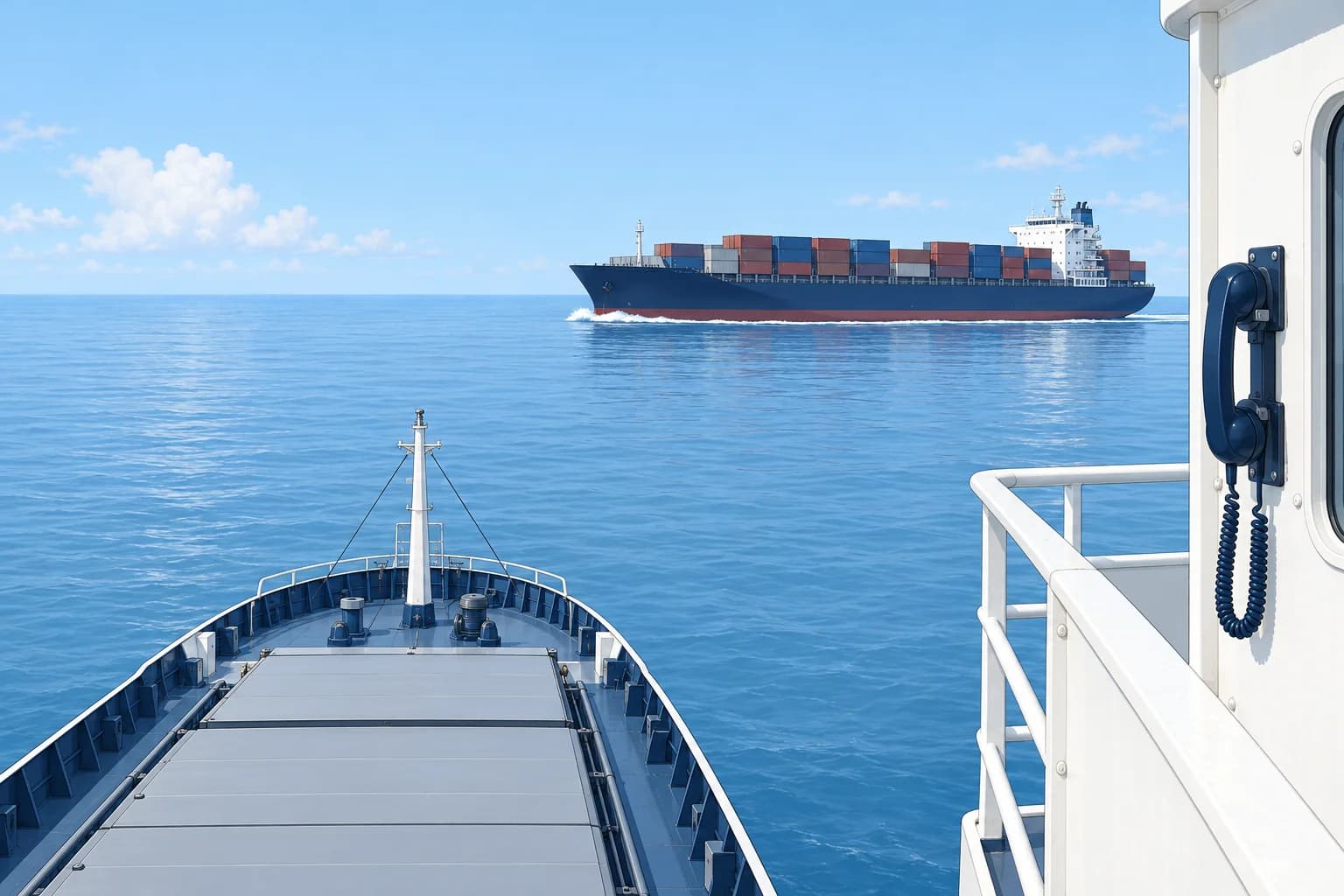
STCW A-VIII/2 says the OOW shall notify the master immediately: if restricted visibility is met or expected; if traffic or the movements of other ships cause concern; if it is hard to keep the course; on failure to sight land, a navigation mark or to obtain soundings (depth measurements) by the expected time; and if land, a mark or a change in soundings appears unexpectedly.
Ship and sea reasons
Also call the master: on breakdown of the engines, propulsion remote control, steering gear or any essential navigational equipment, alarm or indicator; if the radio equipment fails; in heavy weather, if in any doubt about weather damage; if the ship meets a hazard such as ice or a derelict, an abandoned vessel adrift; and in any other emergency or if in any doubt. The master's standing orders often add their own call points: follow the stricter.
Call, and act now
Call the master immediately when required. Take any urgent action for safety without waiting for the master to arrive. If time is short, act at once and have another bridge team member make the call if available. Tell the master what you have done.
Make a good call
Say what is happening, where, what you have done and what help you need. For example: 'Captain, we are two miles south of West Point. Visibility is one mile and falling. Two targets are ahead. I have slowed, started fog signals and called a lookout to the bridge. Please come to the bridge.' Log the call and action taken.
With a pilot on board
A pilot does not relieve the master or OOW of their duties for the ship's safety. Keep checking the position and movement. If you doubt the pilot's actions or intentions, ask the pilot to explain. If doubt remains, call the master at once and take whatever action is needed before the master arrives.
Key figures
- Source
- STCW Code A-VIII/2, Part 4-1, performing the navigational watch
- Catch-all
- Any other emergency, or if in any doubt
- While waiting
- Take immediate action for the ship's safety where needed
- Pilot on board
- Doubt remains after asking the pilot: call the master, act
Remember
- Call for restricted visibility, worrying traffic, steering trouble or a missing or surprise mark or sounding.
- Call for breakdowns, radio failure, heavy-weather doubt, ice or derelicts, and any doubt.
- Call immediately when required, and take urgent safety action without waiting for the master.
- A pilot on board does not remove the OOW's duties.
Common mistakes
Wrong: Once you have called the master, wait for orders before altering course.
Right: STCW tells the OOW not to hesitate to take immediate action for the ship's safety, even after calling.
Wrong: Calling the master over something small shows you cannot cope.
Right: STCW lists 'if in any doubt' as a reason to call. Good masters want early calls.
Worked case
Your night orders say the headland light should be sighted by 0300, bearing about 020°. At 0310 there is still no light, the echo sounder shows 38 m where the chart gives about 60 m on your track, and visibility looks fine.
Show the answer
Call the master immediately: the expected light is missing and the depth is unexpectedly shallow. Check the ship's position independently and compare it with the passage plan. Take any immediate action needed to keep the ship safe while the master comes. Report and log what you find and what you do.
Practice question
Which of these situations is on the STCW list for calling the master immediately?
- Changing over from autopilot to hand steering
- Failing to sight a mark by the expected time
- Exchanging routine reports with a coast station
- Taking the noon position and logging it
Show the answer
Answer: B. Failure to sight land, a navigation mark or to obtain soundings by the expected time is a listed call point.
5 · Coastal and anchor
Coastal and congested waters, poor visibility, darkness and anchor watch
Near the coast, fix often and by more than one method on the largest-scale chart. Fog, darkness and anchoring each add their own duties.
Charts and fixes
A fix is your position established from observations. Use the largest-scale corrected chart available: the chart showing the most detail. Fix often, using more than one method where possible: radar ranges, visual bearings and satellite positions from a global navigation satellite system (GNSS). With ECDIS, the electronic chart display and information system, use charts of an appropriate usage band, the category suited to that stage of navigation. Check position independently at suitable intervals. Identify each mark before using it. Use radar throughout congested waters.
How often to fix
Choose an interval that leaves time to detect an error and act before danger. At 12 knots you travel 1 nautical mile in 5 minutes. At your latest fix, a shoal edge runs parallel to your track, 1 mile away. A 2-knot current sets you towards it, so the sideways margin is 30 minutes. Five-minute fixes limit sideways movement to 0.17 mile between fixes. Shorten the interval if the margin falls. Set is the direction towards which the current flows.
Restricted visibility
When restricted visibility is met or expected, first comply with the COLREG: sound fog signals, proceed at a safe speed and have the engines ready for immediate manoeuvre. Also show the navigation lights, operate and use the radar, call the master and post a lookout where they can hear as well as see. Have someone ready to steer by hand.
Darkness
At night, the master and OOW arrange the lookout with due regard to the bridge equipment and aids available, their limits and the safeguards in place. A small wheelhouse with bright screens ruins night vision: dim every display, use a red or very low chart-table light, and remember that the sole-lookout allowance is for daylight only.
At anchor
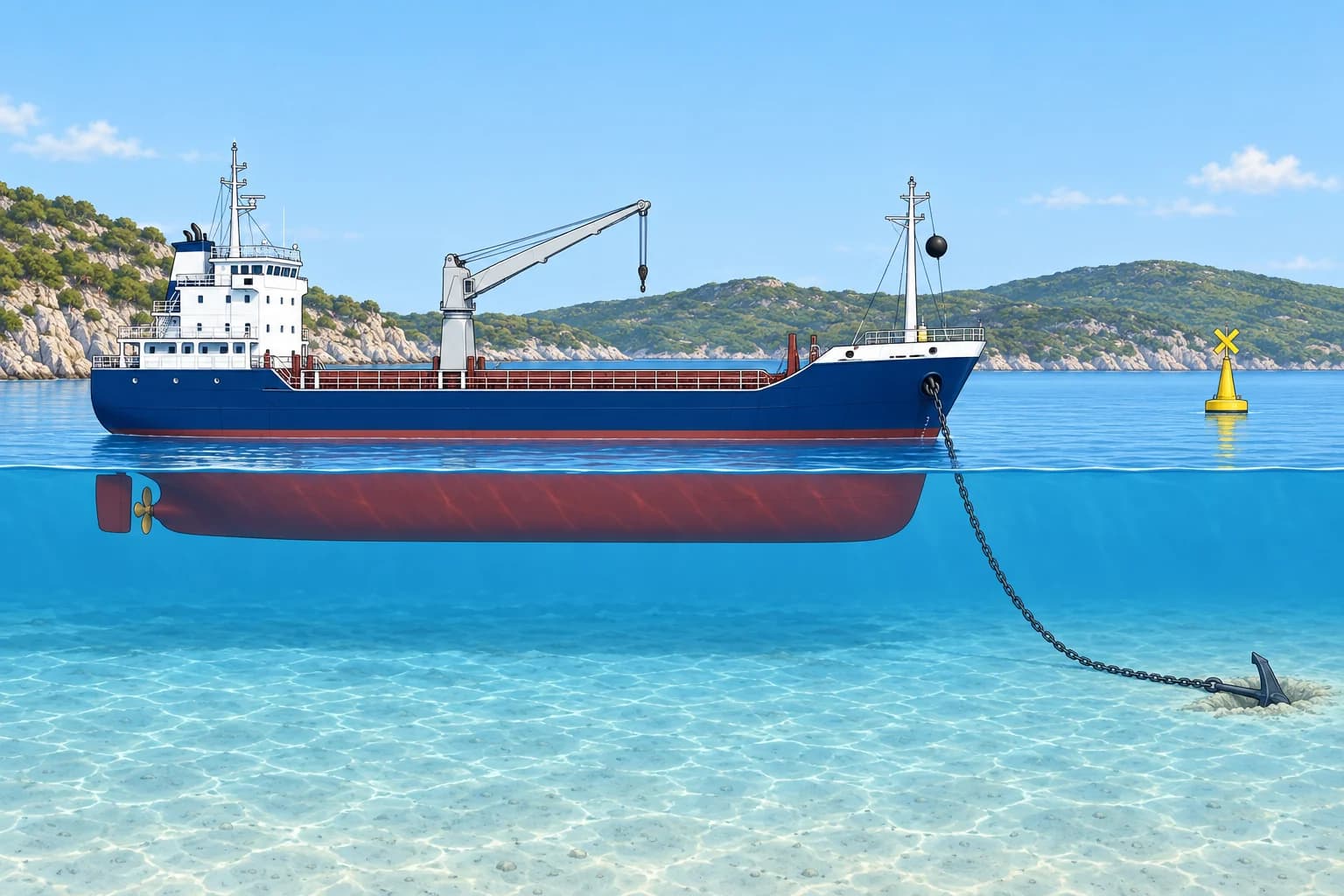
If a navigational watch is required at anchor, plot the position promptly. Check frequently that the ship holds, using bearings of fixed marks or shore objects. Maintain a proper lookout and arrange periodic inspection rounds without leaving the watch unattended. Watch weather, tide and sea. Keep engines at ordered readiness; show the required lights, shapes and sound signals. If the ship drags or visibility drops, call the master and act. Prevent pollution and follow applicable regulations.
Key figures
- Chart
- Largest scale on board for the area, corrected to date
- Fixes
- Frequent, by more than one method where possible
- ECDIS
- Right usage band; check position by independent means
- Radar
- In restricted visibility and always in congested waters
- Fix interval
- Short enough to detect an error and act before reaching danger
- 12 knots
- 1 mile every 5 minutes
Remember
- Largest-scale corrected chart, frequent fixes, more than one method.
- Choose the fix interval from the distance to danger and your speed and set.
- Fog: signals, safe speed, engines ready, lights, radar, lookout, master called.
- At anchor: plot the position, check bearings often, call the master if she drags.
Common mistakes
Wrong: GNSS on the ECDIS is accurate, so other fixes are a waste of time near the coast.
Right: STCW asks for fixes by more than one method where possible and an independent check of the ECDIS position.
Wrong: A fix every 30 minutes is always enough on a coastal passage.
Right: The interval depends on the distance to danger, speed and set. Close to a shoal you may need a fix every few minutes.
Worked case
Your 400 GT ship lies at anchor in an open roadstead, wind rising. At 0200 the bearing of the breakwater-head light has changed by 6° since 0130 and the radar range of the point has opened by 0.2 mile, while the swinging circle drawn on the chart does not explain it.
Show the answer
Treat it as dragging. Call the master at once and the engine room for the engines, and tell the anchor party to stand by. Confirm with a second fix by radar and GNSS. Keep a sharp lookout for ships astern and nearby, and be ready to sound the signals the situation needs. Log the bearings and times.
Practice question
Which chart should you use in coastal waters?
- The smallest-scale chart, for the widest possible view
- The largest-scale suitable chart, kept corrected
- Any chart that shows the next waypoint
- The chart printed most recently on board
Show the answer
Answer: B. STCW requires the largest-scale chart on board suitable for the area and corrected with the latest information.